



Garage floors and gym floors get compared a lot. They shouldn’t be. A gym floor sees things a garage doesn’t — dumbbells dropped from waist height, loaded barbells dragged sideways, sweat pooling in the same spot daily, and cleaning chemicals strong enough to cut through that sweat applied six days a week. Heavy equipment sitting in the same position for years concentrates hundreds of pounds into a footprint the size of a fist.
The coating system that works in a garage isn’t automatically the right answer for a gym. What follows is a practical guide to what actually holds up in fitness environments — and why the zone matters as much as the coating.
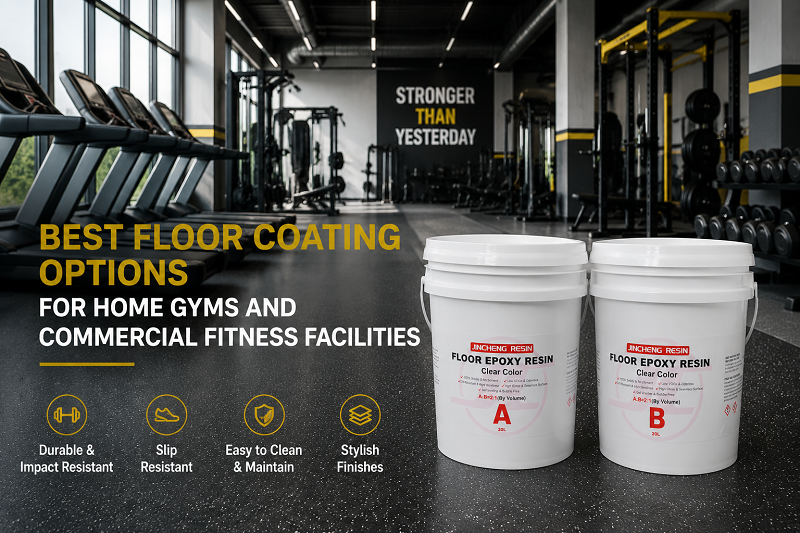
What the Floor Is Actually Dealing With
Four things, specifically.
Impact. Rigid coatings — epoxy, polyaspartic — don’t absorb shock. A 45-pound plate dropped from knee height onto bare epoxy can chip or crack the surface. That single drop isn’t the problem. A thousand of them, over years, in the same area, is. The damage accumulates at stress points: under rack feet, near weight storage edges, wherever the floor takes repeated point-load hits.
Moisture. Sweat pools in cardio zones. Water bottles tip over. Commercial facilities mop daily. The floor needs to be non-porous enough that none of this soaks in — but smooth enough that it becomes a slip hazard when wet if you don’t address the surface texture explicitly.
Chemical exposure. Commercial gym cleaning protocols run harder than most people expect — quaternary ammonium disinfectants, hydrogen peroxide-based products, sometimes diluted bleach. Most floor coating topcoats handle these fine when used occasionally. Daily exposure over years is a different story. Coatings that fail under cleaning chemicals don’t announce it — they just start looking worn, then dull, then soft.
Sustained load and abrasion. Treadmills run in the same spot at constant friction for years. Cable machine feet press into the surface without moving. Users drag plates and dumbbells rather than lifting them properly. The surface needs to resist that kind of localized, repetitive mechanical stress without showing it in year two.
Epoxy vs. Rubber — Why This Is the Wrong Question
This debate comes up in almost every gym floor conversation, and the framing is misleading. Epoxy and rubber solve different problems. They aren’t competing for the same job.
A coated concrete floor — epoxy, polyaspartic, or any coating system — is good at being cleanable, seamless, moisture-resistant, and visually finished. It is not built to absorb the impact of a dropped weight or to cushion the repetitive joint load of plyometric training.
Rubber is good at exactly those things. It’s not good at being seamless, easy to keep bacteria-free, or resistant to long-term moisture beneath it.
The setup that performs best in practice is both: a coated slab underneath, rubber in specific zones where impact and cushioning matter. That’s not a compromise — it’s using each material for what it actually does well. Most professional gym installations work this way by default.
The Coating Options That Hold Up
100% Solids Epoxy floor coating with Anti-Slip Aggregate
The cost-accessible baseline for gym floor coating. Creates a seamless, non-porous surface that handles moisture, resists bacteria buildup, and holds up under fixed equipment — treadmills, cable machines, bikes — without issue under normal operating conditions.
The slip problem is real and needs to be addressed explicitly. Quartz or aluminum oxide broadcast into the topcoat adds measurable grip. This isn’t optional in any zone that sees sweat. Without it, a smooth epoxy floor plus wet feet is a genuine safety problem.
Where the limits show: anywhere weights get set down hard or dragged repeatedly. The rigidity that gives epoxy its compressive strength also means it doesn’t absorb impact. Repeated point-load stress — under rack feet especially — accumulates as chipping over time, not all at once.
Where it belongs: Cardio zones, yoga and stretching studios, functional training areas, locker rooms, storage. Home gyms where the primary activity is cardio or bodyweight training. Cost: $5–$10/sq ft installed | Lifespan: 8–12 years
Polyaspartic Floor Coating
Polyaspartic cures harder than standard epoxy — and that hardness translates to better abrasion and impact resistance, not just a glossier finish. The aliphatic chemistry means it won’t yellow under UV, which matters in studios with significant natural light.
Two things make polyaspartic specifically practical for gym environments:
The odor situation. Rubber flooring holds smells. A non-porous polyaspartic surface doesn’t — cleaning it properly is enough to keep odors from building up. In a commercial facility with hundreds of daily users, this is a real operational difference that rubber-only installations constantly fight.
Return to service. Walk-on in 4–6 hours, full service in 24. A commercial gym shutting down for a week to recoat the floor loses meaningful revenue. Polyaspartic changes what’s practically installable during a short operational window.
The cushioning limitation is the same as epoxy — harder cure doesn’t mean impact absorption. Rubber in lifting zones is still the right call on top of a polyaspartic slab.
Where it belongs: Commercial facilities with tight downtime constraints, spaces with UV exposure, any facility where odor control matters, premium home gym builds. Cost: $8–$14/sq ft installed | Lifespan: 15–20 years
Epoxy Base + Polyurethane or Polyaspartic Topcoat
The system most experienced commercial gym installers actually spec. Epoxy goes down first for thickness, structural build, and adhesion cost-efficiency. Aliphatic polyurethane or polyaspartic goes over it as the wear surface — UV stable, harder, more abrasion-resistant than bare epoxy.
Polyurethane adds something else worth noting: elongation at break of 100–300%, versus near-zero for rigid epoxy. It’s not the same as rubber flexibility — not by a long way — but in zones where equipment gets moved rather than dropped (cable machines, cardio equipment, turf-drag areas), that additional flexibility reduces chipping accumulation over years.
The full commercial system: epoxy base, aliphatic topcoat, anti-slip aggregate throughout. Each layer does something different. The epoxy does the structural work. The topcoat handles the environment. The aggregate handles the safety.
Where it belongs: Complete gym floors where different zones share one coating system; cost-balanced alternative to full polyaspartic. Cost: $7–$12/sq ft installed | Lifespan: 12–15 years
Zone-by-Zone Breakdown
The single biggest planning mistake is treating the whole gym as one surface. Each zone has a different failure mode.
Cardio zone: Fixed equipment, constant friction, daily moisture. Coated slab with anti-slip aggregate handles this without issue. Rubber under individual machines is optional if machines already have rubber feet — useful as additional protection, not strictly required.
Free weight and lifting zone: This is where coating-only approaches hit their limit. Point-load impact from set-downs and drops is what the floor gets, repeatedly, in the same places. The right answer isn’t a tougher coating — it’s 8–12mm rubber over the coated slab at rack positions and lifting platforms. The coating handles the rest of the floor; the rubber handles the abuse.
Studio and group fitness: Bare feet, lateral movement, plyometrics — surfaces that see body-weight impact and directional friction. Anti-slip aggregate is essential. Matte or satin finish works better visually and shows less wear than high-gloss in this zone.
Locker rooms and wet areas: Perpetual moisture, chemical exposure, bare feet. Aluminum oxide aggregate (more aggressive than quartz) with a waterproof coating system. Seamless floor-to-wall transition is important — grout lines and tile seams harbor bacteria in high-moisture environments.
Entry and reception: Tracked-in grit, high visual exposure, the first impression of the facility. Decorative flake or metallic system with a hard polyaspartic topcoat holds up both aesthetically and physically.
System Comparison
| System | Impact Resistance | Anti-Slip (with aggregate) | Odor Resistance | Maintenance | Cost/sq ft |
|---|---|---|---|---|---|
| 100% solids epoxy | Moderate | Good | Good | Low | $5–$10 |
| Polyaspartic | Good | Excellent | Excellent | Very low | $8–$14 |
| Epoxy + polyurethane topcoat | Moderate–Good | Good | Good | Low | $7–$12 |
| Rubber (mat/roll) | Excellent | Excellent | Poor | Medium | $2–$8 |
| Hybrid (coating + rubber zones) | Excellent | Excellent | Good | Low–Medium | Varies |
Four Things to Nail Down for a Commercial Install
Anti-slip numbers. OSHA wet floor COF ≥ 0.6 applies to commercial fitness environments. Ask for test data on the specified system with the aggregate broadcast included — not a general product claim.
Disinfectant compatibility. Confirm that the topcoat chemistry holds up to the specific cleaning products used in the facility. Quat-based and peroxide-based disinfectants are not the same thing, and not all topcoats handle both equally over daily long-term exposure.
Downtime budget. If the facility can’t shut down for more than 24–48 hours, polyaspartic is essentially the only viable recoat option. Factor this into the system selection, not just the cost comparison.
Warranty scope. Standard installation warranties sometimes carve out high-impact environments. Confirm the warranty specifically covers gym use before signing.
The Short Version
A coated concrete floor is the right base for almost every gym environment — clean, seamless, non-porous, and far more maintainable than bare concrete or rubber-only setups. Where it needs help is in zones where weights actually hit the floor, and the answer there isn’t a different coating. It’s rubber in those specific spots on top of the coating.
Home gym: 100% solids epoxy with anti-slip aggregate gets you 80% of the way there. Upgrade to polyaspartic if the build warrants it.
Commercial facility: polyaspartic or epoxy-polyurethane hybrid throughout, rubber in all lifting zones, 24-hour return-to-service capability, and aggregate in every zone that sees sweat.