

Floor coatings play a vital role in factory operations, as they have to bear heavy machinery loads, constant foot traffic, chemical spills, and heavy wear and tear. Picking the right industrial floor coating is far more than an aesthetic choice; it is a strategic investment in workplace safety, operational efficiency, and long-term cost control. With so many products available on the market, many factory managers and business owners struggle to choose the most suitable solution.
The right choice always depends on your factory’s real needs: your industry, working environment, and budget. Below is a clear overview of the most commonly used industrial floor coatings.
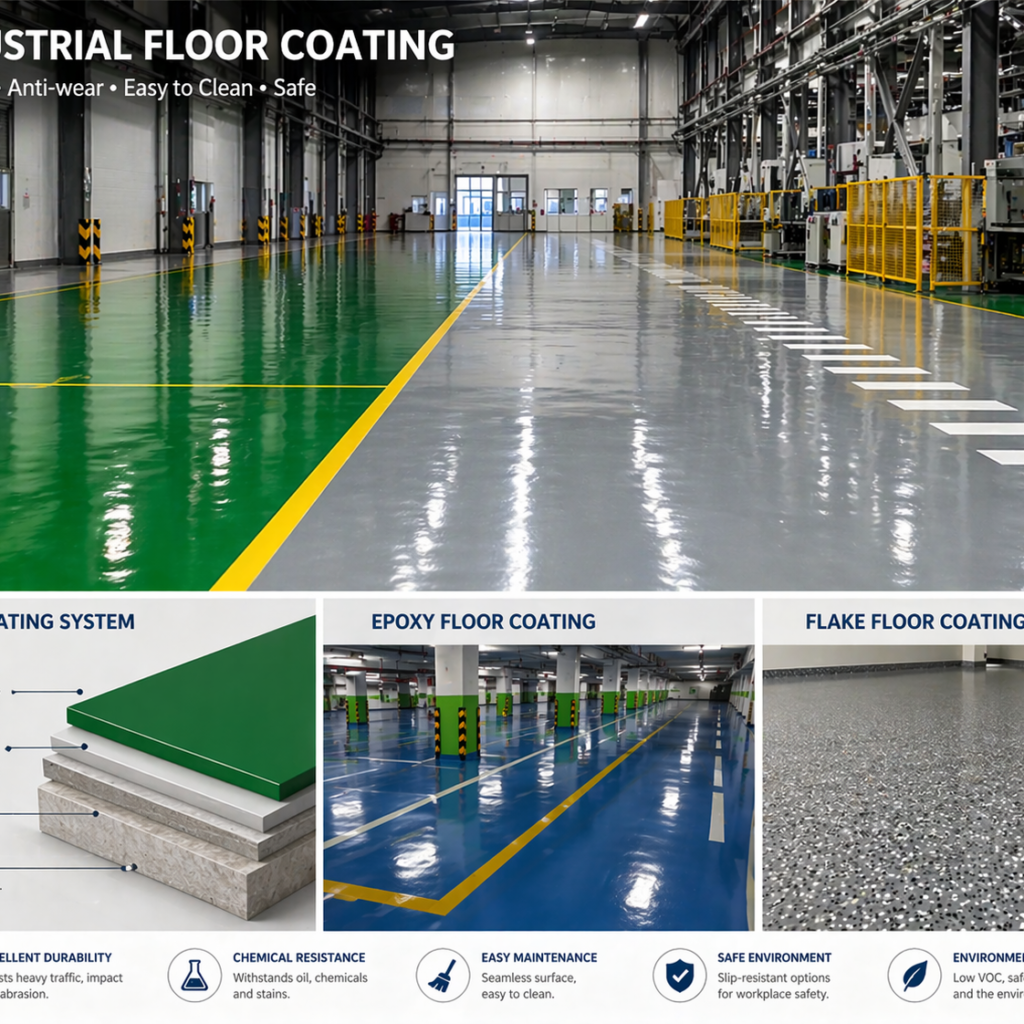
Epoxy Floor Coating
Epoxy is the most widely used floor coating in factories, offering an excellent balance of durability, cost efficiency, and versatility for most production facilities. It is made by mixing epoxy resin with a curing agent, creating a hard, seamless surface that bonds strongly to concrete.
Key Benefits
- Strong adhesion to concrete substrates
- Resistant to oils, greases, and mild chemicals
- Smooth, easy-to-clean finish
- Ideal for light‑to‑medium duty areas
For light to medium factories, warehouses, electronics plants, and food processing facilities, epoxy works very well. In heavier‑load settings, adding colored quartz or sand aggregates can greatly improve abrasion resistance and compressive strength.
Limitations
- Average temperature tolerance; may become brittle in extreme cold or heat
- Prone to yellowing under long‑term sunlight exposure
- Not recommended for areas with constant heavy impacts or strong chemical exposure
Polyurethane Floor Coating
Polyurethane has long been a reliable choice for industrial flooring. It is more flexible than epoxy, with better abrasion resistance, wider temperature tolerance (suitable for both cold and hot environments), and strong UV resistance. It is ideal for factories handling heavy machinery, extreme temperatures, or frequent chemical spills.
Recommended Uses
Heavy industry, automotive plants, machinery workshops, cold storage facilities, and chemical processing plants. Thanks to its UV resistance, polyurethane is also the top choice for outdoor and semi‑outdoor areas like loading bays.
Limitations
Higher upfront cost than epoxy; stricter surface preparation requirements (moisture and dust can weaken adhesion). Many facilities use an epoxy primer plus polyurethane topcoat system for better cost efficiency while keeping high performance.
Polyaspartic Floor Coating
Polyaspartic is a modern flooring solution developed over the past decade, combining the best features of epoxy and polyurethane — with the added benefit of ultra‑fast curing. It is formed through the reaction of isocyanates and amines, producing a tough, flexible surface that can cure in as little as 12 hours, depending on the manufacturer’s formula.
Key Advantages
- Fast curing, greatly reducing factory downtime
- Excellent impact resistance, abrasion resistance, chemical resistance, and UV stability
- Flexible enough to withstand heavy loads and temperature changes
- Waterproof, suitable for damp or leak‑prone floors
- Can fill small cracks and flaws on slightly damaged concrete
- Longest service life among the three options
Recommended Uses
Factories needing quick turnaround, heavy machinery zones, areas with frequent chemical spills, and damp environments.
Limitations
Highest cost among the three materials. Many factories lower costs by using epoxy primer and mid‑coat with a polyaspartic topcoat. Professional installation is required due to the short working window caused by fast curing; on‑site DIY application is not advised.
How to Choose the Right Coating for Your Factory
The best coating depends on your factory’s real conditions: traffic volume, load intensity, chemical exposure, environment, and budget. Here is a simple guide:
- For most light to medium factories (warehouses, electronics, food processing):Epoxy coating provides the best balance of cost and performance.
- For factories with heavy loads, outdoor use, high temperature demands, or regular chemical contact:Polyurethane or polyurea coatings are more durable and flexible.
Important reminder: Proper surface preparation is essential no matter which coating you choose. Concrete must be clean, dry, free of cracks and contaminants to ensure a strong bond. Skipping this step can lead to peeling, cracking, or early failure, resulting in higher long-term repair costs.
Choosing the right industrial floor coating gives you a safe, long‑lasting floor that delivers years of reliable performance. If you have questions or need support, feel free to contact us for professional advice.