


Selecting the right indoor epoxy floor paint involves much more than picking a visual color or buying a single bucket of resin. In the case of industrial facilities, commercial buildings, and heavy logistics centers, the longevity of the floors is determined by an architectural process. Even though a one-layer coating process may look more appealing to thrifty managers, it usually does not withstand the heavy use made by foot traffic and vehicles. That is why global purchasers of flooring solutions are turning towards high-quality multi-layered resin systems.
Understanding the Layers of Indoor Epoxy Floor Paint
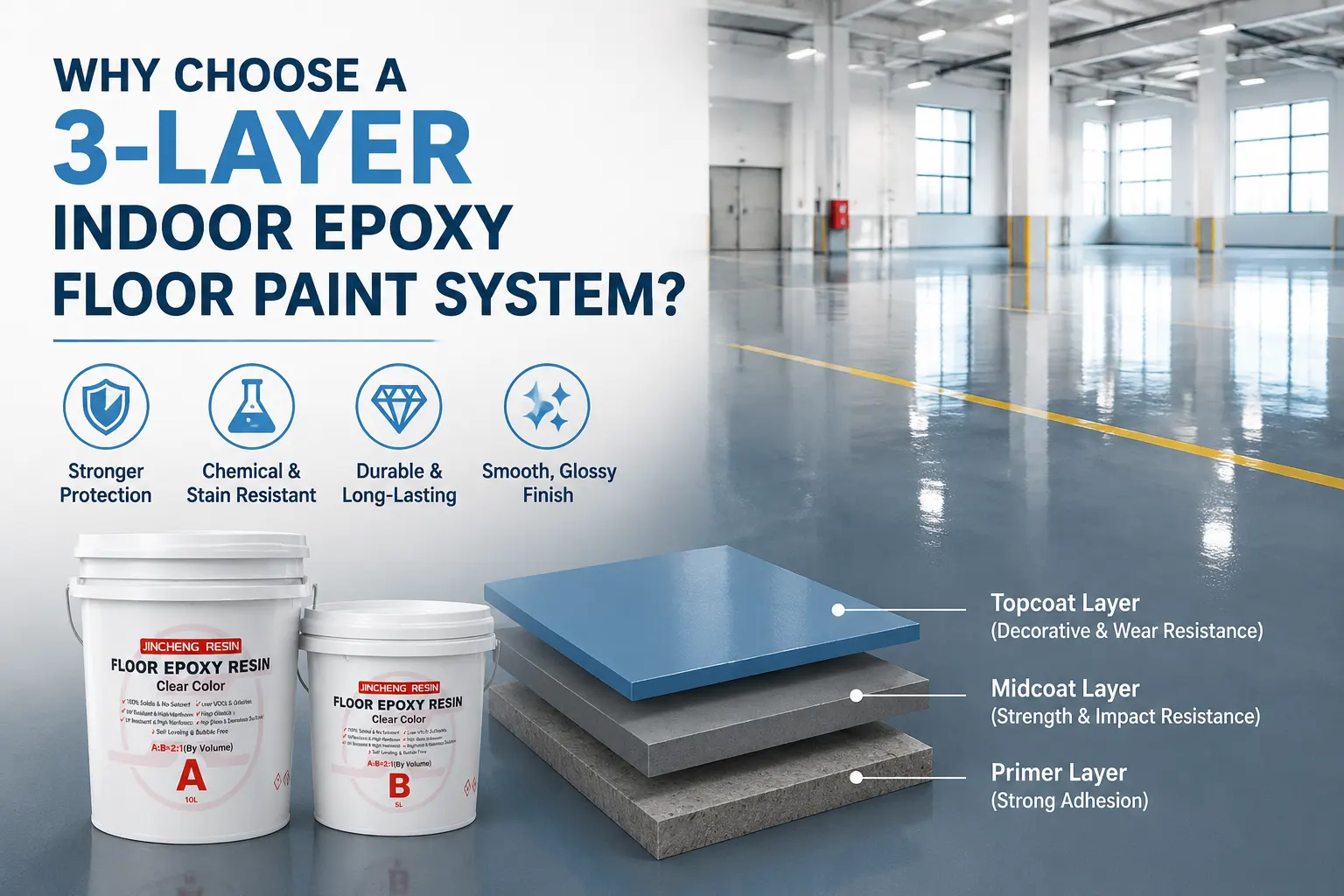
In order to obtain an industrial-quality finish, industry experts rely on a structured method that consists of three separate stages: the primer coat, the build coat, and the hard-top coat. Each of these layers serves a particular function in protecting the concrete surface from chemical leaks, physical damage, and abrasions.
1. The Important Function of Moisture Vapor Barrier (MVB) and Primer Coats
Before applying any decorative indoor epoxy floor paint, a professional installer evaluates the base concrete. A good primer is essential because it must be capable of adhering very well to the surface to prevent moisture vapor from coming up through the surface and causing the floor layers to separate from each other. Primers may either be epoxy resins or moisture-vapor-barrier epoxy primers that are capable of penetrating deep into the concrete capillaries and stopping any moisture from coming up through the ground.
2. Intermediate Mid-Coats for Thickness and Aesthetics
The intermediate layer is where the structural thickness and main aesthetic appeal of the indoor epoxy floor paint system are established. Depending on the project requirements, this middle coat can incorporate various advanced materials:
- Metallic Systems: Utilizing metallic pigments mixed within clear epoxy resins to create strong, multi-dimensional, marble-like visual effects.
- Flake Systems: Broadcasting vinyl chips over a colored epoxy base coat to provide texture, slip resistance, and high visual contrast.
- Colored Sand Systems: Mixing quartz aggregate with high-grade polymers for maximum compressive strength in heavy-manufacturing zones.
3. High-Performance Top Coats for Long-Term Protection
The final layer seals the entire matrix. While traditional indoor epoxy floor paint can extend to the top coat, modern technical specifications often demand specialized polymers like polyaspartic polyurea or polyurethane. Polyaspartic coatings stand out as the high-end category of top coats; they are scratch-resistant, have excellent heavyweight-bearing ability, and are fully UV-stable to prevent any form of ambering. Polyurethane coatings are equally preferred for one-coat application as well as flex-top coatings because of their excellent chemical resistance.
Single-Coat Paint vs. Multi-Layer Systems
| Feature / Metric | Single-Coat Application | Three-Layer Structural System |
| Material Composition | Single layer of standard epoxy or polyurethane | MVB Primer + Decorative Mid-Coat + Polyaspartic Top Coat |
| Moisture Resistance | Extremely low; high risk of bubbling | Excellent; MVB actively blocks vapor pressure |
| Load-Bearing Capacity | Light foot traffic only | Heavy vehicular traffic, forklifts, and machinery |
| UV Discoloration | Tends to turn yellow over time | High UV resistance (when polyaspartic is used) |
| Lifespan | 6 to 12 months under commercial use | 5 to 10+ years with proper maintenance |
Why Polyaspartic Overcomes Standard Floor Wear
When looking at the final sealing layer over your indoor epoxy floor paint, evaluating polyaspartic polyurea chemistry is essential. This premium coating cures rapidly, allowing commercial facilities to resume operations in a fraction of the time required by standard resins.
Enhanced Abrasion Resistance for B2B Facilities
In busy environments, floors face constant frictional wear from pallets and heavy machinery. Polyaspartic top coats deliver up to three times the abrasion resistance of standard indoor epoxy floor paint formulations. This dense molecular cross-linking ensures that undercoat designs—whether they are intricate metallic marbling or dense decorative flakes—remain shielded from continuous scratching.
Superior Chemical and UV Stability
Commercial storage spaces frequently handle oils, solvents, and cleaning detergents. Standard indoor epoxy floor paint can degrade or stain when exposed to harsh industrial chemicals. By including a polyaspartic or high-grade polyurethane seal, one forms a barrier that is completely resistant to chemical stains due to chemicals. Also, unlike standard epoxy, which tends to yellow under sun exposure through big windows, polyaspartic retains its clarity forever.
Choosing the Best System For Industrial Environments
Every commercial project requires a distinct material formulation balance. Traditional warehousing applications may benefit from a proven system that consists of a classic color system of flake or sand with a combination of epoxy primer, thick epoxy intermediate coating, and resilient polyurethane topcoat.
Where more advanced showroom or commercial applications are concerned, a metallic intermediate coat together with a crystal-clear polyaspartic topcoat can give unparalleled aesthetic value. If a project suffers from severe underground dampness, deploying a dedicated MVB primer before applying the main indoor epoxy floor paint layers is a non-negotiable step to prevent future layout failures.
Connect with Flooring Formulation Experts
Do you want to elevate the performance of your next commercial project using commercial-quality flooring resins? Learn about our extensive selection of top epoxy primers, metallic mid-coats, and incredibly durable polyaspartic top coats. Speak with our technical sales department to get custom formulas, bulk purchase opportunities, and consultation for your next flooring project.