



Polyaspartic floor coatings have become increasingly popular in industrial floors, parking lots, commercial spaces, and warehousing and logistics facilities in recent years. Their advantages, such as fast curing speed, strong weather resistance, wear and corrosion resistance, and short construction cycle, make them widely used in projects with high construction efficiency requirements.
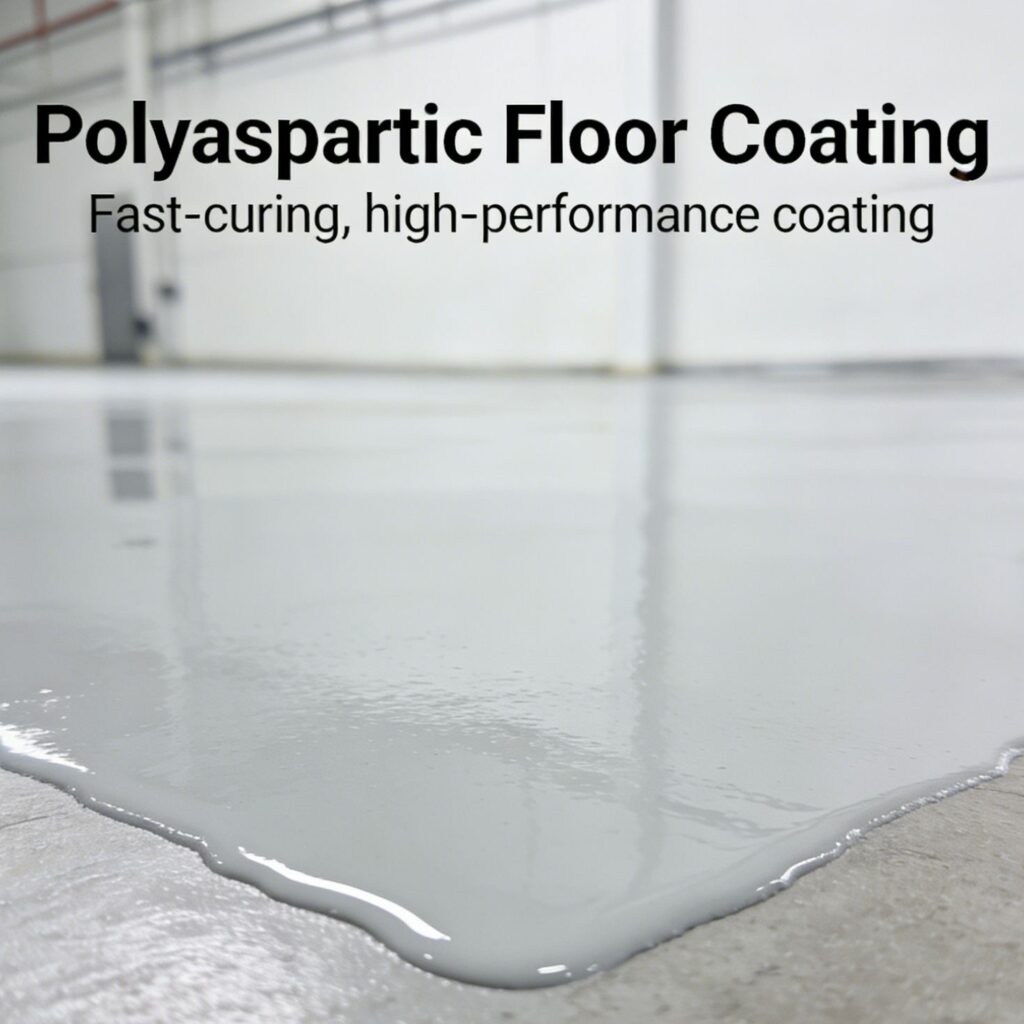
However, even the best materials require correct construction methods to achieve their optimal performance. Many flooring projects experience problems such as blistering, delamination, and peeling, which are often not due to material quality issues, but rather to improper handling of construction details. Below, Jingcheng will provide a detailed introduction to the construction methods and key steps of polyaspartic acid floor coatings, hoping to be helpful to everyone.
Preparation and base surface treatment before construction
Preparing the necessary tools and materials before construction can effectively prevent delays during the process. For example, check if the A and B components of the polyaspartic acid floor coating are complete and undamaged, and ensure that the matching hardener and thinner are complete.
Substrate preparation is one of the core aspects of the entire construction process. Many instances of hollow spots and delamination in flooring later on stem from inadequate substrate preparation. The first step is to check the strength of the concrete substrate. Generally, the concrete strength should reach C25 or higher, and the surface should be free of obvious sand, cracks, or oil stains. If the substrate quality is poor, it needs to be repaired or ground beforehand. Finally, the moisture content of the ground should be below 8% (excessive ground humidity can easily lead to primer failure, resulting in delamination, blistering, etc.). If the humidity is too high, it should be ventilated and dried promptly; construction on wet surfaces is strictly prohibited.
Material proportions
Polyaspartic floor coatings are generally two-component materials (a small number are single-component). When mixing, it is crucial to strictly follow the manufacturer’s instructions. Components A and B are typically mixed in a 1:1 mass ratio. Do not arbitrarily change the ratio, otherwise incomplete curing and insufficient hardness may occur. When mixing, first stir component A thoroughly, then add component B and stir with an electric mixer at low speed for 3-5 minutes to ensure the two components are fully combined, without particles or color differences. After stirring, let it stand for 2 minutes to defoam and prevent pinholes and bubbles in the coating after application. (Note that after mixing, the application should be carried out as soon as possible. The curing window for polyaspartic floor coatings is very short, typically between 40-50 minutes, and is affected by temperature; higher temperatures result in faster curing.)
Layered construction
Polyaspartic flooring construction generally involves three steps: primer, intermediate coat, and topcoat. Each layer must be fully cured before proceeding to the next.
The primer is a crucial step in PAA flooring construction, enhancing adhesion and sealing the substrate. It penetrates the concrete, creating a strong bond between the coating and the substrate. For highly absorbent concrete substrates, the amount of primer used can be increased. After primer application, it typically cures in about one hour (the exact time depends on temperature).
The intermediate coat primarily improves the floor’s wear resistance and smoothness. Quartz sand or powder is usually added to the intermediate coat to form a more robust structural layer. The intermediate coat cures in approximately 12-24 hours. After curing, it requires light sanding again to eliminate uneven areas and remove dust.
The topcoat is the final step in the entire flooring coating process and determines the floor’s appearance and protective properties, such as high-gloss or matte finishes, and UV resistance. The topcoat will be surface dry in 2-4 hours after application, and pedestrian traffic is allowed after 24 hours. It will reach its optimal hardness and wear resistance after 7 days. During this period, it is strictly forbidden to run over it with heavy objects or scratch it with sharp objects. Avoid contact with corrosive substances such as acids, alkalis, and oils. Do not sprinkle water or mop the floor in advance.
In general, the application method for polyaspartic floor coatings is not complicated. The key lies in substrate preparation, material mixing ratios, and environmental control during construction. As long as the standard procedures are followed, you can achieve a high-quality floor finish that is wear-resistant, aesthetically pleasing, and has a long lifespan.
If you need the most cost-effective, high-quality polyaspartic floor coatings, please contact Jingcheng. We have the most professional engineers and sales staff to serve you.