



Epoxy floor coatings show up almost everywhere these days—from busy factories and bustling commercial spots to our own garages and homes. It’s easy to see why, given how incredibly durable, good-looking, and relatively affordable they can be. Still, when someone is trying to pick the right epoxy coating, one big question often comes up: how do you really decide between a solvent-based option and a solvent-free one? What truly sets them apart from each other? Here, we’ll break down the key differences between these two types of epoxy floor coatings, aiming to help you figure out which product might be the best fit for your project.
What is Solvent-Based Epoxy Floor Coating?
Solvent-based epoxy floor coatings refer to epoxy resins added with a certain amount of solvents, usually alcohols, ketones, esters, etc. (containing 30% to 60% organic solvents). These solvents reduce the viscosity of epoxy resin, making it easier to apply and flow during construction. This type of coating is generally applied by brushing, rolling or spraying, with a single construction thickness of 0.1-0.3mm per coat. Multiple coats are required to achieve the usable thickness.
If you’re using solvent-based epoxy coatings, it’s really important to make sure you have good ventilation while you’re working. That’s because as the solvents evaporate, they release a good amount of VOCs into the air, which can affect air quality and potentially impact your health if you’re breathing them in over time. Now, these solvent-based epoxy coatings do come with some advantages. They’re usually less expensive in terms of material cost, pretty easy to apply, and quite versatile. This often makes them a popular choice for projects with tighter budgets or for spaces that don’t require the absolute highest performance. The downside, though, is their higher emissions of volatile organic compounds and that often lengthy drying time, both of which are common concerns people have.
What is Solvent-Free Epoxy Floor Coating?
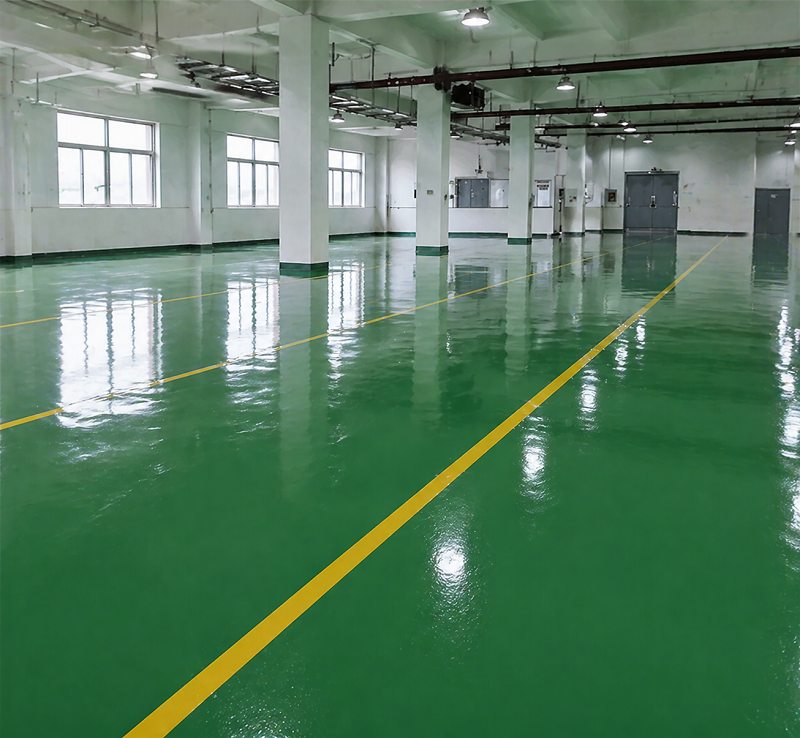
As the name suggests, solvent-free epoxy floor coatings do not contain any organic solvents. They use low-viscosity epoxy resins and curing agents, or reactive diluents (these diluents become part of the final cured film and do not volatilize) to achieve constructible viscosity, so there is no concern about VOC emissions.
Compared with solvent-based coatings, solvent-free epoxy floor coatings are more eco-friendly with zero VOC emissions; they have a faster drying speed (usually surface drying in 4-6 hours, full curing in 24-48 hours), and a thicker single construction thickness (1-3mm), which reduces construction times and effectively lowers labor costs. Solvent-free coatings have higher wear resistance and compressive strength, making them ideal for high-demand scenarios such as workshops and warehouses.
However, solvent-free epoxy floor coatings have higher viscosity, requiring more experienced construction workers, and the material cost is also higher. The combination of professional construction teams and high material costs discourages many people with limited funds.
What is Water-Based Epoxy Floor Coating?
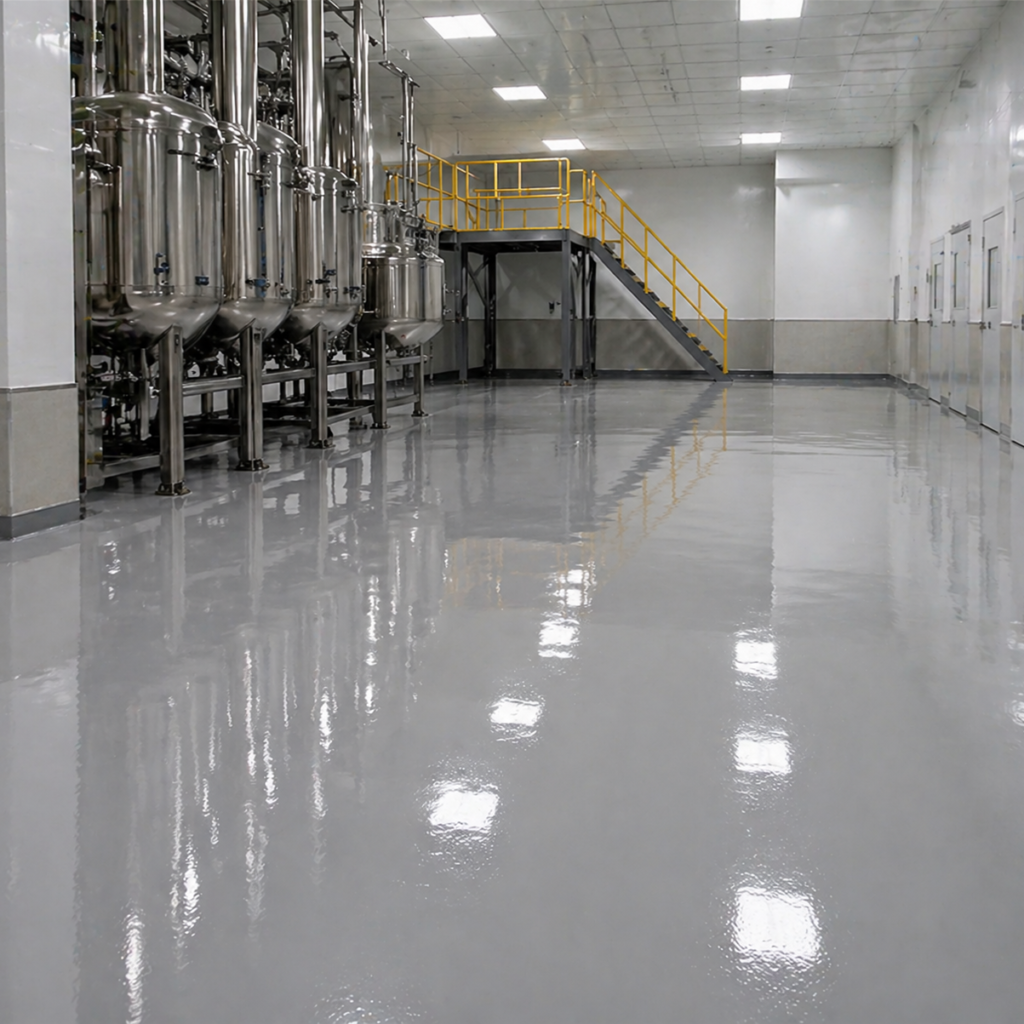
When discussing solvent-based and solvent-free epoxy coatings, water-based epoxy floor coatings are also indispensable. They use water as a solvent or diluent, allowing construction with low VOC emissions and no harmful gases.
Water-based epoxy coatings not only meet environmental protection standards but also have excellent adhesion and durability. Due to their special curing mechanism, the dried coating film has micro-pores that allow water vapor penetration, preventing coating damage and making them highly suitable for damp floors. They also have good recoatability on old substrates.
Nevertheless, water-based epoxy coatings have poor temperature resistance, especially in high-temperature environments, where they are prone to cracking and peeling. In addition, their cost is the highest among the three types of coatings.
Comparison Table
| Characteristics | Solvent-Based Epoxy Coating | Solvent-Free Epoxy Coating | Water-Based Epoxy Coating |
| Solvent content | Contains solvents | Solvent-free | Uses water as solvent |
| VOC emissions | High | None | Extremely low |
| Construction environment requirements | Requires ventilation | No special ventilation required | Strict temperature control |
| Curing time | Relatively long | Relatively fast | Fast |
| Chemical resistance | Strong | Relatively strong | Good |
| Application scope | Suitable for low-demand scenarios | Suitable for high-strength, high-wear scenarios | Suitable for damp floors |
| Cost | Low | High | Highest |
Summary
Solvent-based, solvent-free, and water-based epoxy coatings—they each come with their own unique set of upsides and challenges. Really, the trick to choosing the right epoxy floor coating is to carefully weigh both what your specific location requires and what makes sense economically. My hope is that this article has helped you get a better handle on the distinctions among these different types of epoxy floor coatings, making your decision a bit clearer. If you’re still wrestling with which way to go, perhaps having a chat with Jincheng might be useful. They have a team of pretty knowledgeable epoxy floor coating engineers and sales representatives available to talk through any questions you might have.