



Bare concrete seems extremely resistant, but if looked at through a microscope, it acts similarly to a sponge that is very rigid and filled with minuscule capillaries. The acid, oils, and water vapor from the ground keep pushing against these micro-capillaries in manufacturing facilities, food processing plants, underground parking lots, and chemical storage depots. As soon as the water gets to the steel reinforcement or the acid corrodes the cement matrix, the plant owners need to prepare for shutdown and repair work. Are there Floor Coatings that will prevent this degradation process? There are, but only if you select the proper floor coating system and conduct thorough surface preparation.
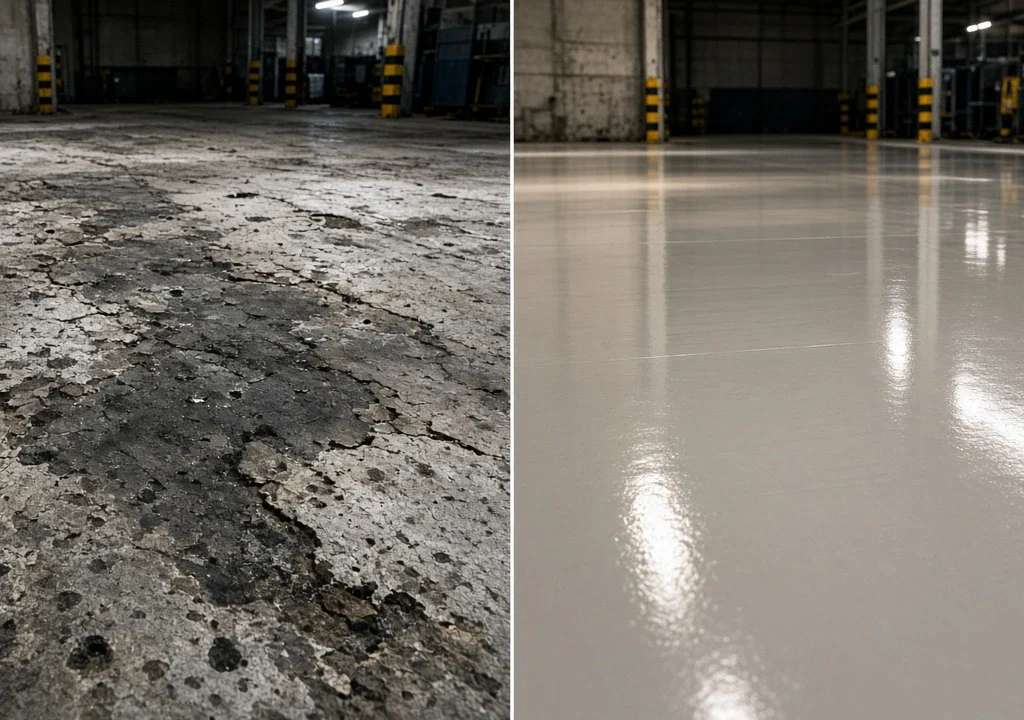
1. How Do Chemicals and Moisture Damage Concrete Floors?
Knowing the mechanisms of slab failure will greatly help in preventing this issue. On average, unsealed concrete consists of an open porosity ranging from 10% to 15%. This means that any liquid or gas can easily pass through it to reach the substrate below.
Chemical Attack Due to Acid Spills and Industrial Solvents
The hydrated cement is naturally alkaline, with a pH ranging from 12.5 to 13.5. Calcium hydroxide reacts immediately when mixed with sulfuric acid, hydrochloric acid, or organic acids like lactic and acetic acid that are commonly found in dairy and meat processing plants. This process dissolves the binder matrix of the slab, leaving behind exposed rough aggregate and pits on the surface of the slab. Heavy oils and solvents do not cause violent reactions with concrete; however, these substances penetrate deeply into the capillaries, reducing the internal bond strength of the concrete until it becomes weak and soft.
Moisture Vapor Transmission and Hydrostatic Pressure
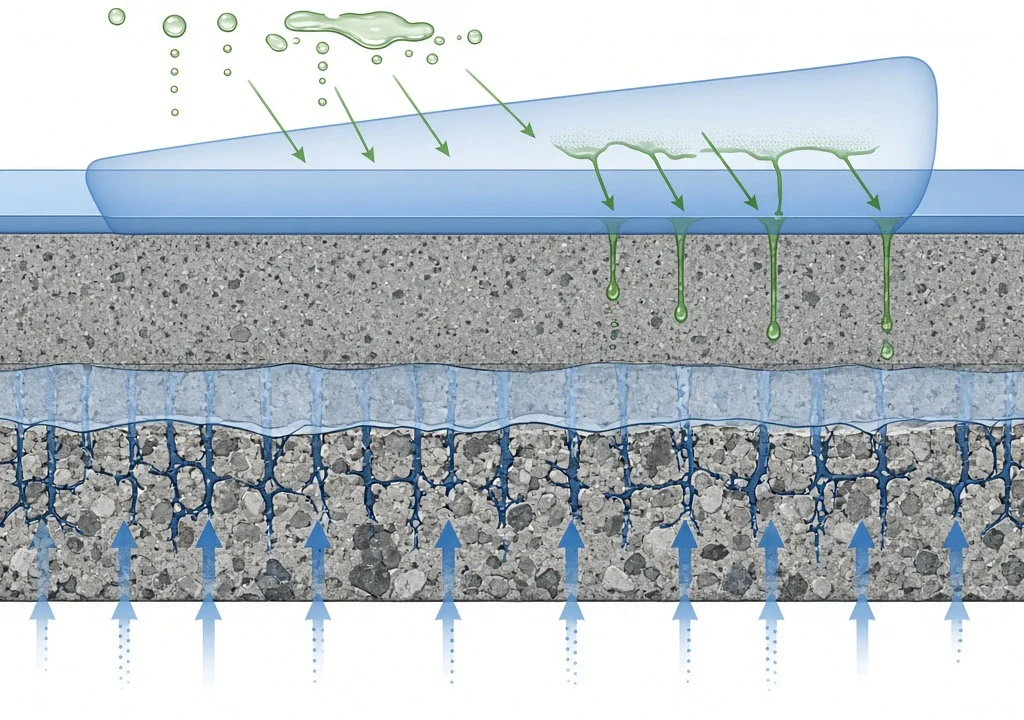
Another source of damage to the concrete floor is water, since this problem is much more difficult to recognize than chemical attack. The water from the ground will naturally vaporize and move upwards through concrete slabs, and the amount of the emitted water vapor is measured with the help of the Moisture Vapor Emission Rate (MVER) metric. If the slab emits more than 3 pounds of water vapor per 1,000 square feet in 24 hours, the accumulated moisture creates upward hydrostatic pressure. In cold storage rooms or unheated warehouses during wintertime, the water that appears in the pores of concrete will freeze, causing a 9% increase in volume. This results in the creation of excessive internal stress, cracking, and spalling of the concrete slab.
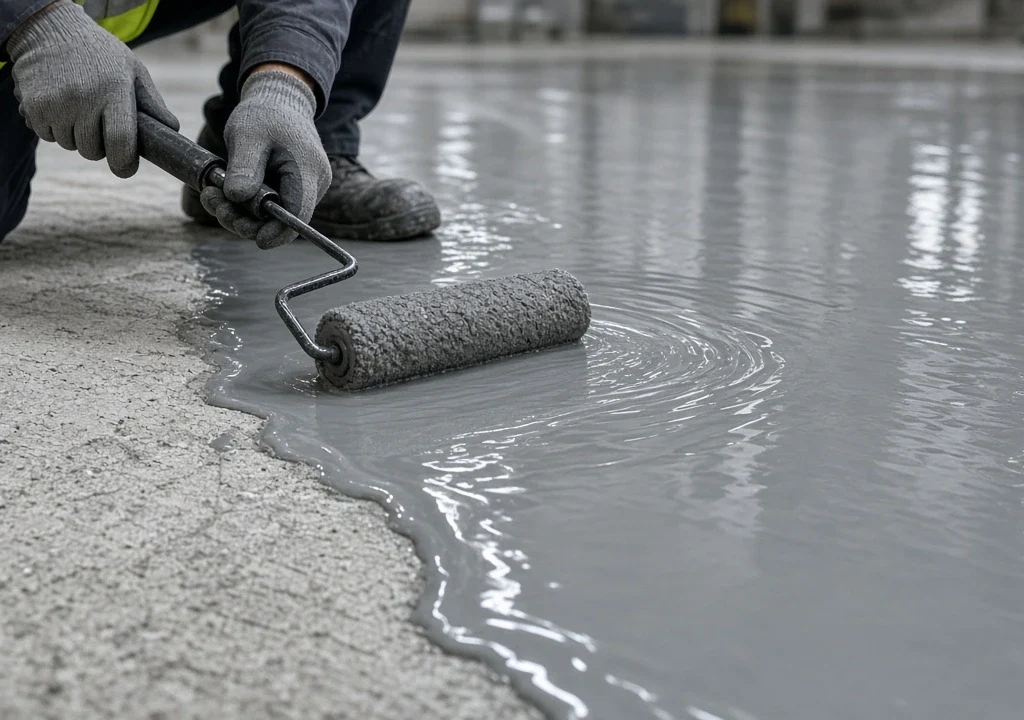
2. How Do Floor Coatings Protect the Slab From Chemical and Moisture Dangers?
Commercial-grade Floor Coatings are much more complex and powerful than a simple layer of industrial paints. With the combination of primer, body, and topcoat, this system locks the concrete slab and forms a seamless polymer barrier.
Capillary Penetration and Sealant
The low-viscosity primers soak 1-3 millimeters deep into the concrete pores. The fully cured resin anchors itself into the concrete slab, providing pull-off adhesion strength exceeding 1.5 MPa and preventing further penetration of fluid from below.
Impermeability of Cross-linked Polymer
During curing, the thermosetting resins form cross-links and become a three-dimensional molecular network that prevents water molecules, chloride ions, and sulfates from penetrating into the substrate and reaching the embedded steel reinforcement.
Thermal Shock and Impact Resistance
The chemical spills usually happen in places where there are forklift or scalding washdown operations. The flexible floor coating system absorbs the mechanical impact and adjusts its dimensions in accordance with the concrete slab under temperature variations from -20°C to 80°C.
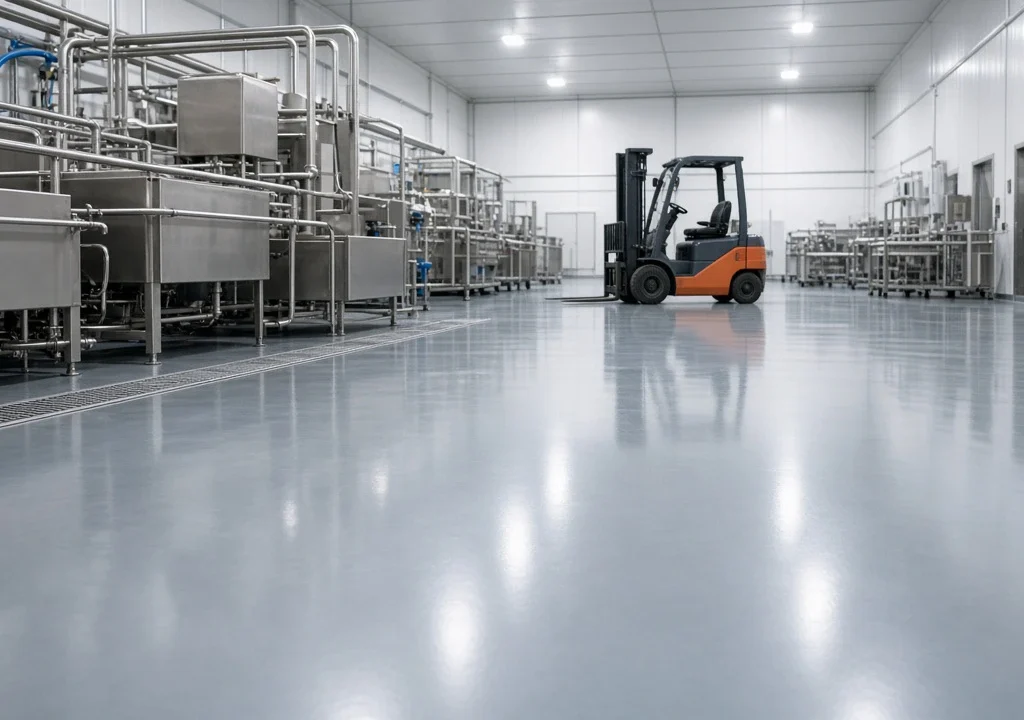
3. What Type of Floor Coatings Are Required for Protection Against Chemical Hazards and Moisture?
Not all Floor Coatings resins provide the same level of protection against different types of hazards. It is important to select the appropriate type of protective barrier depending on chemical concentration, operating temperature, and moisture level in concrete.
| Floor Coatings | Chemical Resistance | Moisture Tolerance | Recommended Thickness | Typical Applications |
| 100%-Solids Epoxy | Moderate (oils, alkalis, dilute acids) | Low to Moderate (requires dry slab or vapor primer) | 1.0 – 3.0 mm | Electronics plants, parking decks, dry warehouses |
| Polyurethane Cement | High (concentrated organic & mineral acids) | Very High (handles damp slabs up to 12 lbs MVER) | 4.0 – 9.0 mm | Food & beverage plants, commercial kitchens, cold storage |
| Vinyl Ester | Extreme (98% sulfuric acid, strong solvents) | Good (with specialized primer systems) | 2.0 – 4.0 mm | Chemical containment zones, plating lines, battery plants |
4. How Can You Extend the Service Life of Protective Floor Coatings?
Even the most durable polymer coating would crack prematurely if it is installed improperly over the substandard slab or does not receive necessary maintenance over its working lifetime. Observing three basic maintenance and installation tips would help extend service life way beyond 10-15 years.
Do the Proper Mechanical Surface Preparation
Always use dust-free grinding with diamonds or shot blasting to remove weak laitance, curing compounds, and oils that may be present. Try to achieve an ICRI profile range from CSP 2 to CSP 4 for the highest mechanical bonding.
Check for Moisture Content Before Floor Coatings Installation
Always check concrete surface moisture content using the concrete moisture meter or calcium chloride tests before the priming process. If the moisture content level is higher than 4% for ordinary epoxy flooring, apply two layers of vapor barrier primer before applying the main coating layer.
Follow Fast Clean-Up Policy For Spills
Even high-build floor coatings are resistant to chemical reaction, but leaving concentrated solutions standing for several days causes faster deterioration of polymers. Clean up any spill larger than 2 square feet using only pH-neutral cleaning agents within two hours, and do not use any metal scrapers to avoid damaging the topcoat.
5. Conclusion
Without protection, concrete gradually weakens due to chemical interaction and hydrostatic moisture pressure. Properly selected floor coating would prevent moisture and chemicals from penetrating into the concrete structure and prevent costly replacement for facility managers.
At Jincheng Resin, we formulate high-performance industrial flooring resins engineered for demanding chemical and moisture environments. Whether you are dealing with persistent slab dampness, acid exposure, or heavy mechanical wear, our technical specialists can help you select the right floor coating resin system for your facility. If you have any questions about product selection or surface preparation, feel free to contact us anytime.