

Today, various industries, businesses, and residential properties demand flooring that is resistant to traffic, chemicals, moisture, and wear and tear. Selecting the best epoxy floor coating supplies is critical in ensuring that a durable floor coating is developed. However, a good floor coating is not just a coat of paint. In most cases, the flooring system will consist of various types of coatings such as primer, intermediate coating, and topcoat.
Therefore, it is essential to gain a deep understanding of the interaction mechanisms between the materials used in epoxy flooring systems, thereby ensuring optimal material selection for the specific application scenario. Every component, from epoxy primer to polyaspartic or polyurethane topcoat, has its own significance in floor enhancement.
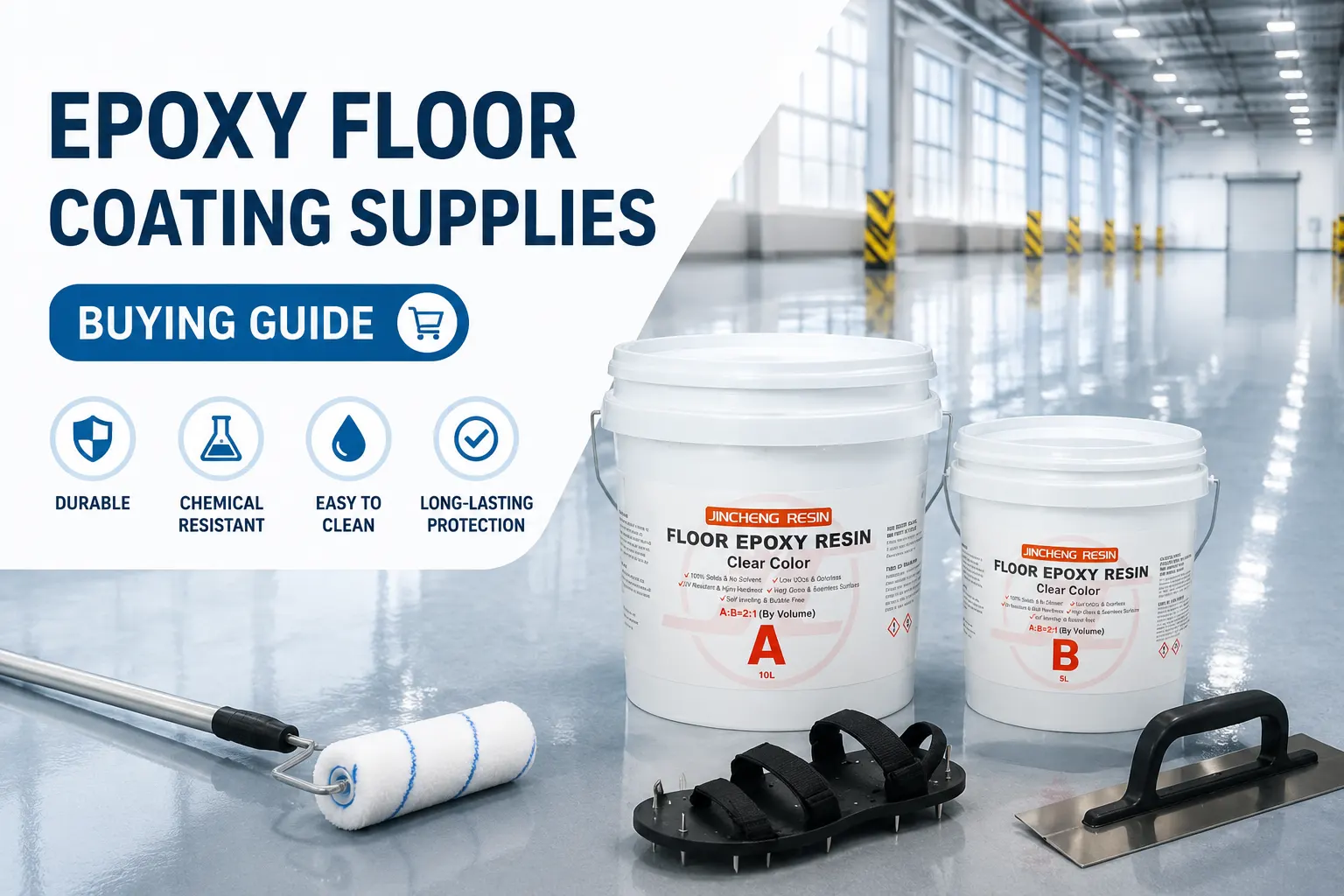
What Are Epoxy Floor Coating Supplies?
Not only is the coating material needed for an installation. Epoxy floor coating materials contain multiple parts that work together to form a strong protective coating on the surface of the floor.
The basic components of floor coatings are:
- Primer layer for surface bonding
- Intermediate coating for thickness and strength
- Topcoat for protection and performance
- Decorative materials (such as metal scraps/flakes, etc.)
The required combination of materials varies depending on the situation. For instance, the flooring for the warehouse may need to be more resistant to impacts and durable, while for the commercial showroom, appearance and easy maintenance are important factors. The selection of appropriate epoxy floor coating supplies depends on the environment.
Epoxy Floor Primer: The Foundation of a Coating System
There is a wide variety of epoxy floor coating supplies, but the primer is particularly critical; it serves as the cornerstone of the entire coating system. Primer is put onto the concrete floor after preparing its surface in order to provide better adhesion of the substrate with other coatings that will be laid.
Epoxy is often used as a primer material because of its good adhesion properties and ability to enter into small pores of the concrete. Application of an epoxy primer helps prevent many problems of the floor, like peeling, unevenness, and poor adhesion. In case there is no primer, the quality of even the best topcoats cannot be guaranteed.
The main functions of an epoxy floor primer include:
- Improving coating adhesion
- Sealing concrete pores
- Reducing surface defects
- Creating a stable base for additional layers
Intermediate Coatings Improve Floor Strength and Appearance
The middle layer is another important part of epoxy floor coating supplies. The purpose is to add to the thickness of the coating, the mechanical strength, and the aesthetics of the floor. Depending on the project specifications, this layer could comprise metallic coatings, flakes, or blended systems. These materials help create decorative effects while also improving surface performance. A high-quality intermediate coating plays a crucial role in bridging and connecting the primer and the topcoat.
For instance, flake coatings are common in garages, commercial sites, and factories due to the ability of flake coatings to provide:
- Better slip resistance
- Improved visual appearance
- Additional surface protection
- Increased coating thickness
Choosing the Right Floor Coating Topcoat Materials
The topcoat is the final protective layer in many epoxy floor coating systems. It directly affects the floor’s resistance to abrasion, chemicals, sunlight, and daily impact. Different topcoat materials offer different advantages.
Epoxy Topcoat
The use of epoxy coatings is very common as they are adhesive in nature, have chemical resistance, and ensure protection. Depending on system requirements, epoxy coatings can be used as primers, intermediate coats, or topcoats.
Epoxy topcoats are suitable for many indoor applications, including:
- Workshops
- Garages
- Manufacturing areas
- Storage spaces
Polyaspartic Topcoat
Polyaspartic coating is a high-performance option among modern epoxy floor coating supplies. Compared with traditional coatings, polyaspartic materials offer excellent wear resistance, UV resistance, and strong protective performance. Due to its superior performance and price, polyaspartic coating is mostly utilized as a protective finish coating rather than a base coating. There are transparent as well as colored versions of polyaspartic coating that are water-resistant in nature.
Its main benefits are as follows:
- High abrasion resistance
- Strong durability
- Better outdoor performance
- Fast-curing characteristics
Polyurethane Top Coat
Polyurethane is yet another type of material that is used as a protective top coat. It gives protection as well as flexibility to surfaces and thus can be used where there is a need for increased resistance. The polyurethane coats offer more flexibility than the epoxy ones.
How Do Epoxy Floor Coating Supplies Work Together?
A complete floor coating system depends on how each layer performs together. The primer, intermediate coating, and topcoat are designed to provide different benefits. Simple flooring projects typically require only a single coat of epoxy, polyurea, or polyurethane. However, multi-layer systems usually provide better overall performance for demanding environments.
The typical application process includes:
1. Surface Preparation
Before commencing the application of the epoxy floor coating supplies, it is essential to ensure that the pretreatment of the concrete substrate has been properly completed in accordance with standards
2. Applying the Primer Coating
It penetrates the surface of the concrete and forms the base for bonding.
3. Adding the Intermediate Layer
The primary function of the intermediate coating is to increase the coating thickness and enhance the durability of the entire flooring system.
4. Applying the Protective Topcoat
It protects the flooring from any outside influence.
How to Select Epoxy Floor Coating Materials for Different Applications?
Choosing the right epoxy floor coating supplies depends on where the floor will be used and what performance requirements are needed.
Industrial Applications
Industrial floors often experience heavy loads, machinery movement, and chemical exposure. These environments usually require stronger coating systems with excellent wear resistance.
A combination of epoxy layers and high-performance topcoats can provide improved protection for factories, warehouses, and production facilities.
Commercial Applications
Commercial spaces often require both durability and an attractive appearance. Decorative epoxy systems with flakes or metallic effects are commonly selected for retail stores, offices, and public areas.
Outdoor Applications
Outdoor floors require better resistance to sunlight and weather conditions. Polyaspartic topcoats are often considered because of their UV resistance and protective performance.
Epoxy vs Polyaspartic vs Polyurethane Floor Coating Materials
There is no single coating material suitable for every project. The best choice depends on factors such as floor usage, environmental conditions, budget, and expected service life. Different materials in epoxy floor coating supplies have different characteristics.
| Material | Main Features | Common Usage |
| Epoxy | Strong adhesion, chemical resistance, versatile application | Primer, midcoat, topcoat |
| Polyaspartic | High wear resistance, UV protection, fast curing | Protective topcoat |
| Polyurethane | Flexible and durable surface protection | Topcoat applications |
Why Proper Selection of Materials Used in Epoxy Floor Coating is Important
The efficiency of the floor coating system depends greatly on the choice of the right materials and proper installation of these materials. The wrong choice of materials may cause cracks, flaking, or reduce the life of the floor. Users will be able to construct a more efficient flooring system by knowing about the functions of each layer of coating.
High-quality epoxy floor coating supplies help improve:
- Floor durability
- Chemical resistance
- Surface appearance
- Maintenance efficiency
- Long-term protection
Conclusion
The use of primer, intermediate coat, and finish coating is responsible for the performance of the entire coating system. Knowing about the various types of epoxy floor coatings, which include epoxy, polyaspartic, and polyurethane, can assist people in choosing the right option.
In case of a project that demands protective and durable floors, people can look into the available options for epoxy floor coating supplies. Professional coating solutions can provide different material options to support various industrial, commercial, and decorative flooring applications.