



Polyaspartic floor coatings are increasingly favored by industrial plants, garages, and commercial spaces due to their advantages such as weather resistance, non-yellowing, wear resistance, impact resistance, quick application, and long service life. While polyaspartic floor coatings may seem like a simple application to the floor, improper application can easily lead to problems such as blistering, delamination, and uneven surfaces later on. Therefore, mastering the correct application method is crucial. Below is a detailed introduction to the application process and some practical tips for polyaspartic floor coatings.
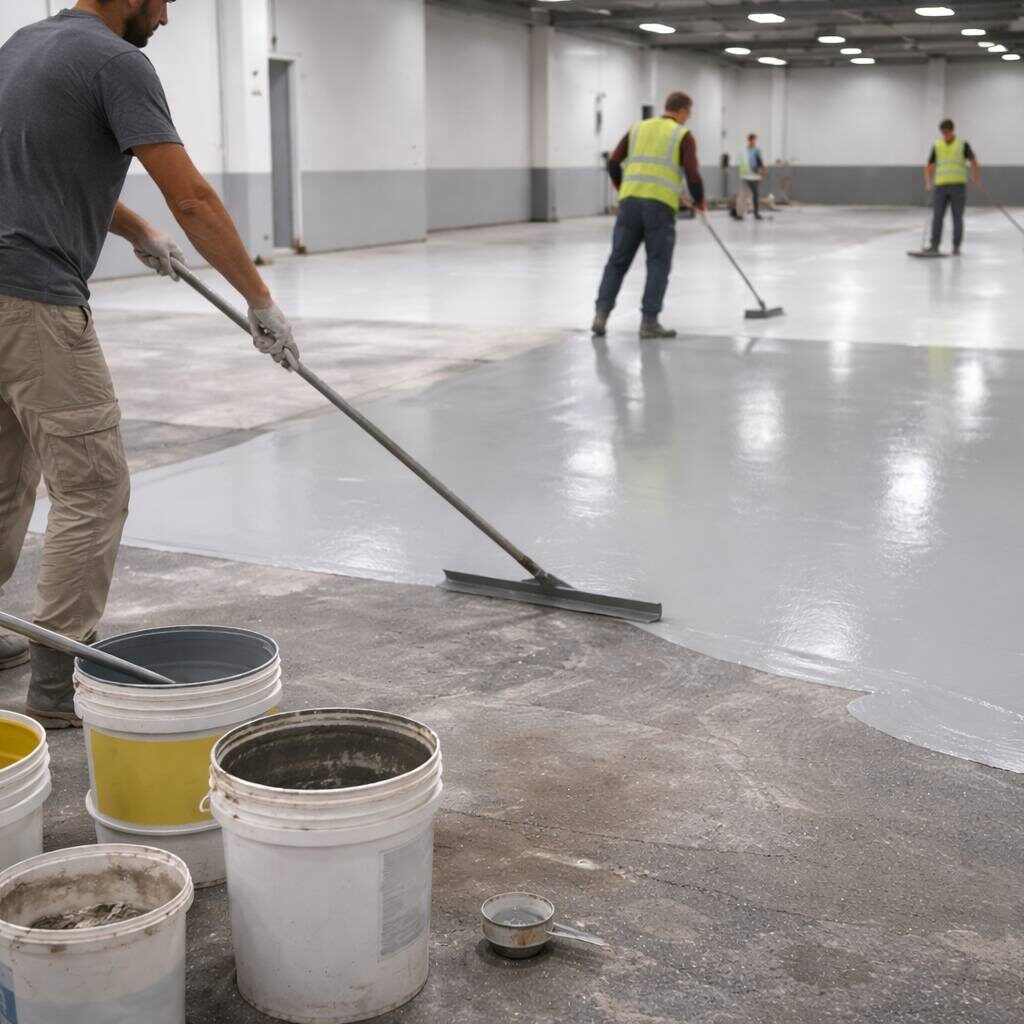
Preparation before application is extremely important and should not be neglected. It is the foundation for ensuring the quality of the floor, just like a solid foundation for building a house. First, inspect the substrate. Whether it’s new concrete or an old surface, ensure it is firm, free of loose sand and dust. Repair any cracks or holes beforehand. Second, control the dryness of the substrate. The concrete moisture content must be ≤8%, which can be tested with a moisture meter. If the humidity exceeds the standard, ventilate and bake it; otherwise, the polyaspartic floor is likely to blister and peel off later.
Ambient temperature control is crucial. The optimal temperature for construction is 5-35℃, with humidity not exceeding 85%. Work should be suspended on rainy or foggy days. If the temperature drops below 5℃, a special low-temperature curing formula is recommended; otherwise, the coating is prone to cracking. Tools required include an electric mixer, short-pile roller, metal scraper, high-pressure water gun, and industrial vacuum cleaner.
The next core construction steps are as follows: The first step is substrate preparation. Clean the ground thoroughly of dust and oil. Use a special degreaser to remove oil, then rinse with a high-pressure water gun, and finally vacuum up any remaining dust, ensuring the surface is free of impurities and obvious water stains. If the surface is uneven, use a large grinder to smooth it; this ensures a tight adhesion and prevents blistering of the subsequent coating.
The second step is primer application. The primer acts as an intermediary, enhancing the adhesion between the coating and the substrate and sealing any pores. Before application, mix the polyaspartic floor coating according to the manufacturer’s instructions, stirring with an electric mixer for 2-3 minutes until there are no particles and the color is uniform. Let it stand for 1 minute to defoam. Apply 1-2 coats evenly with a short-nap roller. Allow to cure for 24 hours at room temperature. It’s ready when it’s no longer sticky to the touch and can proceed to the next step.
The third step is the intermediate coat. If higher wear resistance or thickness is required, an additional intermediate mortar layer can be added. This step primarily increases the strength and overall thickness of the flooring. During application, mix polyaspartic resin with quartz sand in the correct proportions, then apply it evenly to the floor using a trowel. Ensure even thickness during application to avoid unevenness. After the intermediate coat is cured, allow it to cure completely, then sand the entire surface again to create a smoother finish, preparing for the topcoat application.
Topcoat application: The topcoat is the final step in the entire flooring system and a crucial factor in determining the floor’s appearance and performance. Generally, a roller is used to apply the topcoat evenly. For better results, it’s recommended to apply it in two coats: the first coat seals the intermediate coat and improves overall smoothness. The second coat enhances gloss and wear resistance, while also making the surface color more uniform. For non-slip surfaces, anti-slip granules can be sprinkled during the first coat of topcoat, followed by the second coat.
Finally, curing is crucial. After application, the polyaspartic floor coating will be surface dry in 4-12 hours at room temperature. Light pedestrian traffic is permissible after 24 hours, and it reaches optimal performance and is ready for normal use in 3 days. During curing, avoid rain, direct sunlight, heavy impacts, and contact with acids, alkalis, and other chemical reagents. Construction workers must wear masks, gloves, and goggles. Maintain good ventilation on-site and keep flammable materials away from fire sources.
In conclusion, while the application of polyaspartic floor coatings is not overly complex, each step requires careful attention. From substrate preparation and primer application to topcoat completion, every step affects the final floor finish. By adhering to specifications and using reliable materials, a durable, aesthetically pleasing, and long-lasting flooring system can be achieved.
Finally, Jingcheng has been developing floor coatings for over 20 years. If you have any needs for floor coatings, please feel free to contact us. We have the most professional engineers and sales staff to serve you.