



Colored epoxy floor coatings have a wide range of applications due to their smooth surface, strength, and various decorative possibilities. Yet, the traffic of people or other objects, dirt, chemical spills, and exposure to sunlight can spoil thefloor’sr appearance and condition over time. Regular maintenance will help maintain the integrity of the coating.
Proper maintenance of the Colored Epoxy Floor Coating is not hard to do, but it needs proper cleaning products, inspection, and fixing of the damage done to the floor. Proper maintenance procedures also depend on the kind of coating and the usage of the floor.
1. How to Clean Colored Epoxy Floor Coating Properly?
Cleaning regularly ensures that there will not be any abrasive particles on the surface. This is highly necessary, especially in those areas that experience a lot of traffic because the accumulation of contaminants will lead to the wearing out of the finish.
Remove Dust and Loose Debris Regularly
Particulars such as sand and dust may be abrasive when walked over or when driven over with cars. A brush or dust mop made of soft bristles, or a vacuum cleaner for commercial use, should be utilized to remove these particles from the floor. For household garages, the cleaning must be done several times a week, while commercial or workshop garages require daily cleaning.
When cleaning your Colored Epoxy Floor Coating, you should be careful with corners, expansion joints, and underneath machinery since these places may contain debris, which may make cleaning ineffective as well as hide damage. This will help preserve the smooth finish of Colored Epoxy Floor Coating.
Use Suitable Cleaning Solutions and Tools
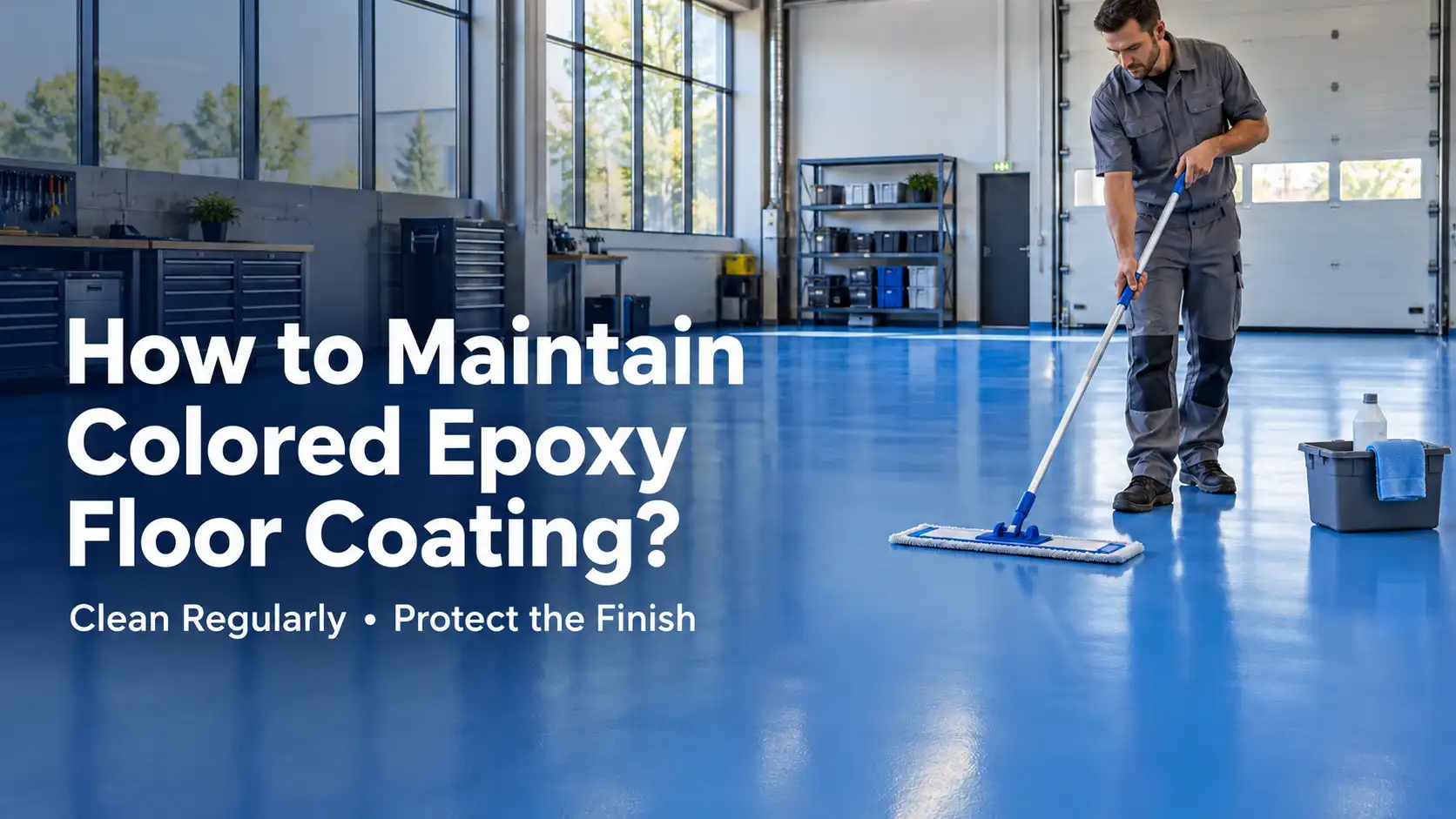
After removing all the loose dirt, the floor should be mopped with water mixed with mild pH-balanced detergent. It is essential to use a microfiber mop for this purpose. Here are some useful tips:
- Dilution of the detergents according to the instructions of the manufacturer.
- Rinsing the soap residues to avoid the possibility of a matte effect or a slippery surface.
- Cleaning of the water to be used, replacing it each time it becomes dirty.
- Abrasive sponges, steel wool, and very acidic or alkaline solutions must not be used unless approved.
A floor scrubber for larger surfaces may be used, with the use of a non-abrasive pad. In any case, testing a newly purchased cleaner on a small and less noticeable area is more desirable.
Remove Oil, Chemical Spills, and Stubborn Stains Promptly
These contaminants, such as oil, grease, paint, and chemicals, need to be handled immediately. Even though the epoxy systems are resistant to most types of stains, there is always a risk that they may get stained and damaged because of their interaction with some chemicals. Firstly, you should soak the spilled liquid with an appropriate absorbent material. Next, you will have to clean the affected area with an appropriate cleaner, which is safe for the coating system.
In the case of industrial floors, there should be a system for dealing with spills. There must be a list of appropriate cleaners along with necessary personal protective equipment. It is highly recommended to refer to the safety data sheet if the material is unknown to you. It is crucial to use proper cleaning materials to avoid chemical contamination and staining of the Colored Epoxy Floor Coating.
2. How to Protect Colored Epoxy Floor Coating from Damage?
However, cleaning will not be sufficient to protect the surface against all types of deterioration. The protection of the floor against mechanical action, light, and improper conditions is equally necessary.
Prevent Scratches from Heavy Equipment and Furniture
Chips and scratches can occur due to heavy loads, metal parts, and dragging of heavy equipment. Rubber pads and suitable wheels for moving equipment must be used under furniture. If there is a need to move heavy equipment from one place to another, use lifting equipment and not dragging loads.
In warehouses, it is necessary to make sure that the coating chosen can cope with the traffic of vehicles and concentrated loads. Ordinary decorative coating does not equal an industrial floor coating system. The Colored Epoxy Floor Coating needs to be checked at loading sites, turning points, and workstations, as these spots are exposed to higher mechanical action than other spots.
Reduce UV Exposure and Chemical Damage
Long-term exposure to UV rays will affect some epoxy floor coating systems through the yellowing process. With respect to the floor coatings exposed to the sun, you may choose UV-resistant topcoats wherever possible, even if not all topcoats will be compatible with your existing floor coating systems. There could also be particular polyurethane and polyaspartic floor coating products that would provide UV resistance better than conventional epoxy floorings.
Each of these coating products has different chemical resistance properties, and you will need to see the technical data sheets of those products with respect to the resistance of oil, solvents, acids, and cleaning agents. You will need a different coating product to protect your floor in a workshop from solvents than in a residential garage from road salts and car fluids. Also, use a UV-resistant topcoat to protect the Colored Epoxy Floor Coating.
Avoid Excessive Moisture and Slippery Conditions
Stagnant water, condensation, or moisture coming through concrete can be a cause of coating problems when the preparation of the base surface is insufficient. Look for wet spots around the drainages, entrances, and washdown stations.
While dry epoxy is waterproof, moisture that comes up through the concrete can impact the whole system of the floor. In case of recurring blistering and peeling, you should look at moisture issues rather than put additional coatings. The floors with epoxy that is wet can become slippery. Quickly clean up the spills, post warning signs while cleaning and think about anti-slip treatment in case there is any liquid or grease.
3. How to Inspect and Repair Colored Epoxy Floor Coating?
Inspections will help in identifying any weaknesses before they spread further. Schedule the inspections based on traffic loading, chemical exposure, and the paint manufacturer’s recommendations for maintaining the paint.
Identify Peeling, Cracks, and Worn Areas
Take note of any discoloration, dullness, scratching, exposure of the concrete, blisters, and any areas where the coating is peeling away from the substrate. Focus on door entrances, vehicle turns, and chemical handling areas. Monthly inspection for residential floors, which receive light traffic, can be considered reasonable. Industrial floors with heavy traffic can be inspected every week, and after major spills or equipment accidents. The exact location and the approximate size of the flaw should be recorded.
Repair Minor Surface Damage Before It Spreads
Localized chips and failures should be fixed using the appropriate repair system. This starts with removing the unattached coatings and contaminations before preparing the substrate as indicated in the repair product’s guidelines. The repair process includes:
- Cleaning and drying the affected section
- Prep work on the affected substrate for proper adhesion
- Primer application where necessary
- Re-reading the coating and curing before use
Avoid covering peeling sections with new epoxy layers without removing the unstable layer. This can result in hiding the defect without solving the adhesion issue.
Know When to Recoat the Epoxy Floor
Reapplication is the best course of action if the coating is faded, discolored, or has reduced gloss while the underlying coating has strong adhesion. Defects that are confined to one area may be rectified through spot repairs, while delamination requires more effort. Before reapplying the Colored Epoxy Floor Coating, confirm the compatibility between the old and new products. This can require cleaning, sanding, or grinding the substrate.
Different products have different curing requirements based on environmental factors. Certain types of products allow for walking after about 24 hours, but other products require more time due to full exposure to chemicals and vehicles. The best thing to do is to adhere to the manufacturer’s technical data sheet for the particular product rather than following a generic schedule.
4. Conclusion
The maintenance of Colored Epoxy Floor Coating will include regular cleaning, protection from mechanical and chemical harm, and inspection of worn-out regions. Removal of any abrasive material, proper cleaning with compatible substances, and correction of minor defects will assist in prolonging the life of the floor surface. Maintenance intervals will depend on various factors such as traffic and environmental conditions.
If you need assistance in choosing appropriate coating products or maintenance of an existing floor, then we at JINCHENG can provide you with the necessary consultation. Please contact us, providing all information concerning your substrate, operating conditions, and maintenance issues.