



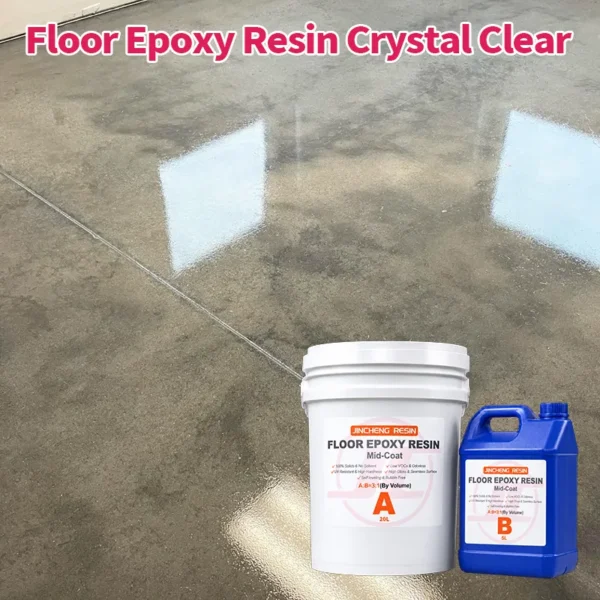
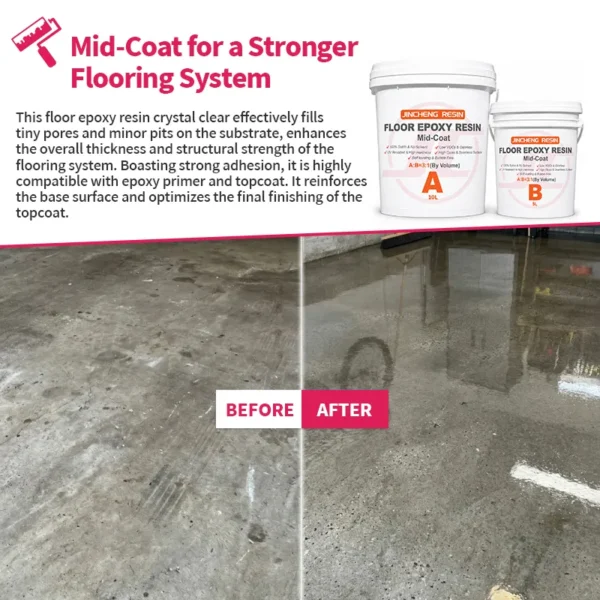
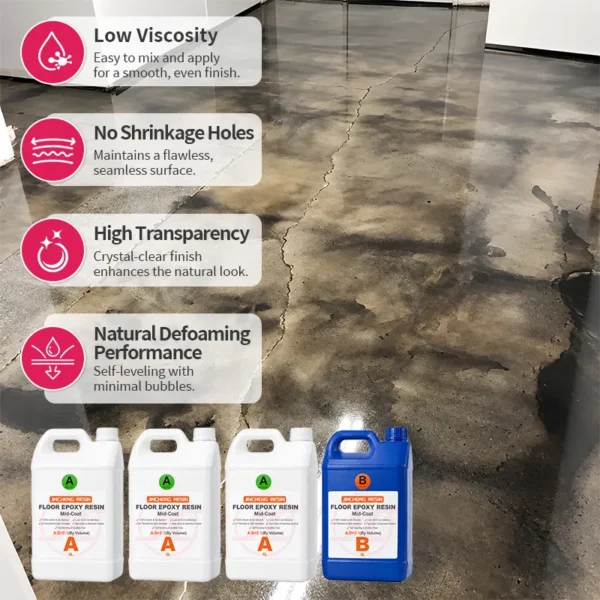




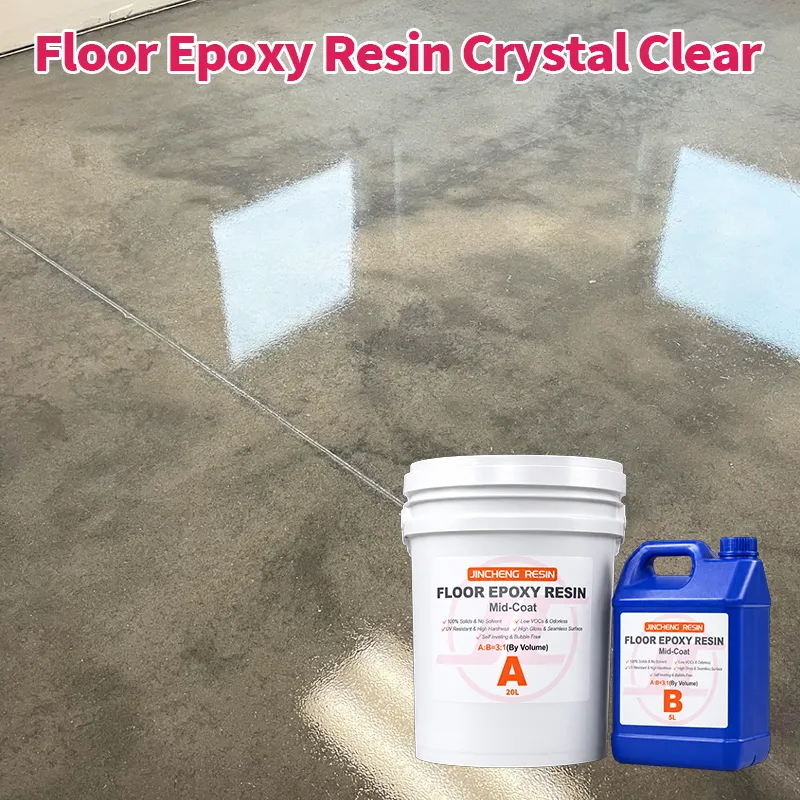
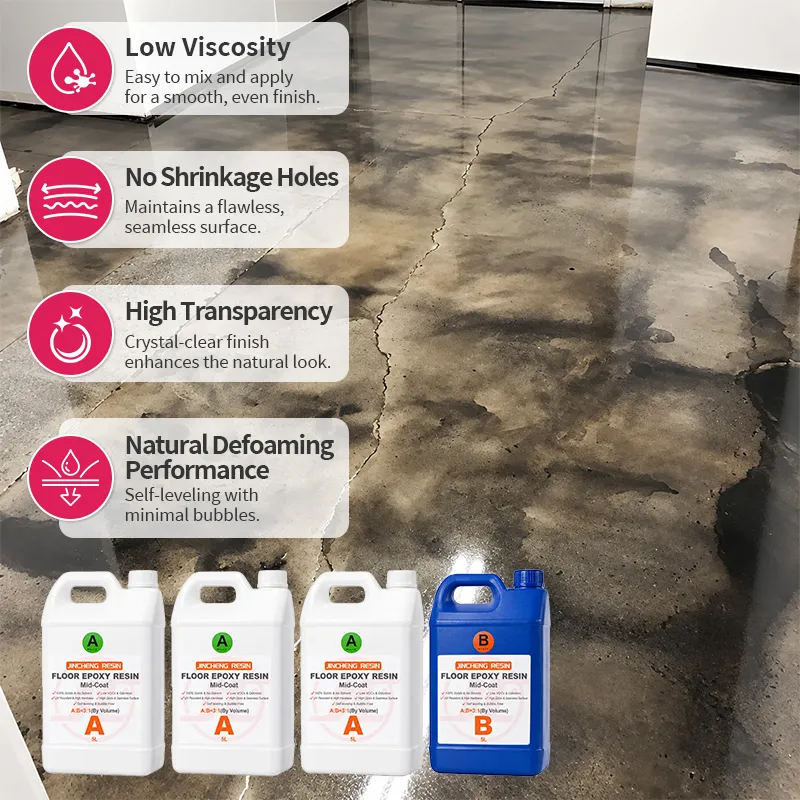

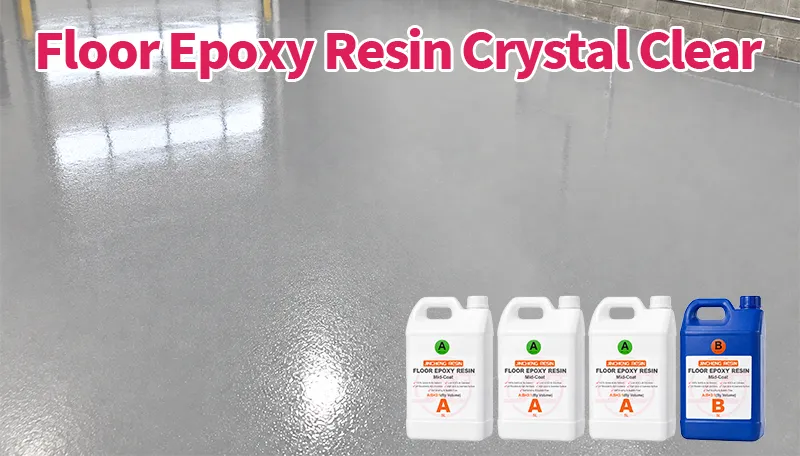
Crystal Clear Epoxy Floor Resin is a two-component system made for the intermediate coat of a multilayer floor, the layer often called the midcoat or body coat. Its viscosity is moderate, it flows well, and it levels evenly. The cured film is hard, glossy and clear. That clarity matters most in decorative floors, where whatever sits beneath the resin has to stay visible.
Cure takes place at ambient temperature. Under suitable process conditions, heat curing is also possible.
Where It Sits in the Floor System
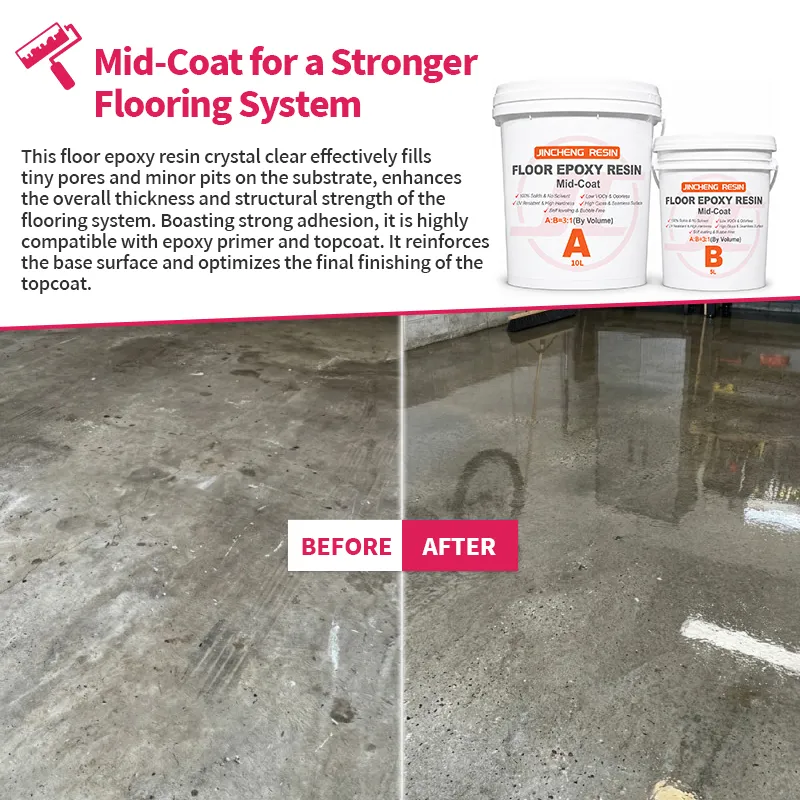
The primer bonds to the prepared substrate. The topcoat sets the final finish. This resin goes between the two: it is laid over a compatible primer and later covered by a topcoat chosen to suit the full system specification.
Its leveling behavior gives the next layer a more uniform surface to work on and softens minor application marks. It does not replace proper surface preparation, though. Cracks, pronounced unevenness and other substrate defects need to be dealt with before any resin goes down.
Flow and Leveling
Once resin and hardener are correctly combined, the mixture spreads easily and settles across the area without much effort from the installer. The moderate viscosity leaves room to control the material while it is being placed.
This counts for more than it might seem in decorative work, because ripples in the body coat tend to show through the layers above. At the recommended thickness and under suitable site conditions, the cured surface comes out flat and smooth. Thickness, working time and installation temperature should follow the technical data sheet.
Transparency for Decorative Systems
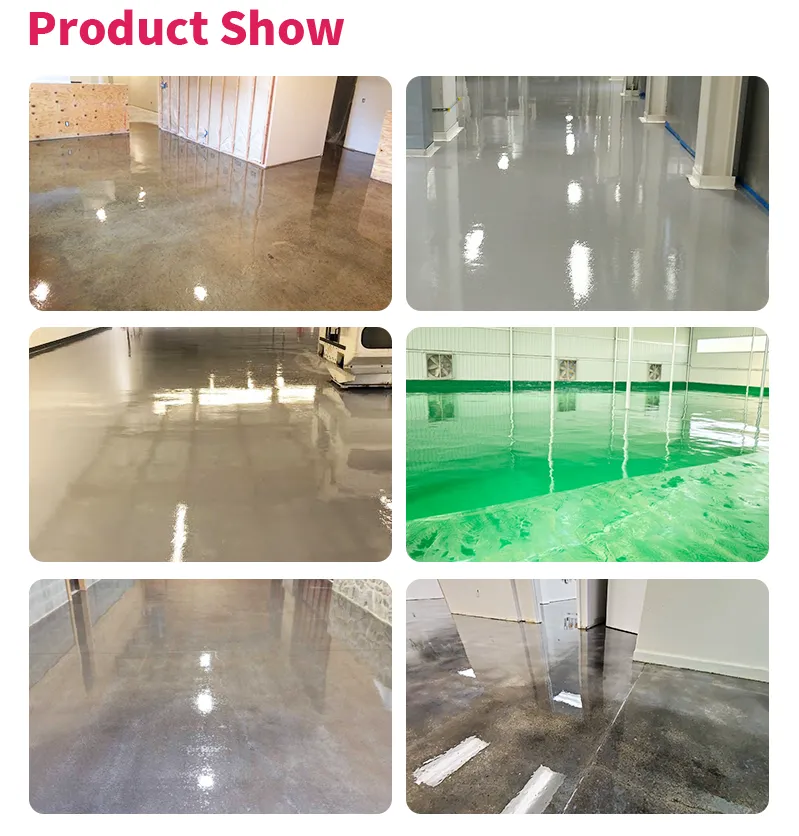
Because the resin is clear, underlying colors and decorative elements remain in view. It is a candidate for metallic, marble-effect and decorative flake constructions that call for a transparent intermediate layer, and where the system design permits, it can also bind compatible decorative materials.
Pigments, colorants, fillers and aggregates should be tested for compatibility first. A small trial area will show how the color develops, how the material flows and what the cured layer looks like, before work begins on the full floor.
Defoaming and Cured Film
The formulation releases entrained air naturally during application, and combined with its leveling, this gives a clearer and more even film. Mixing technique still counts. A high mixing speed draws in extra air and makes bubbles harder to control.
After curing under the specified conditions, the layer is hard and glossy. The finished floor’s final gloss, texture and surface performance, however, depend on the topcoat and on how the system as a whole is built.
Application Notes
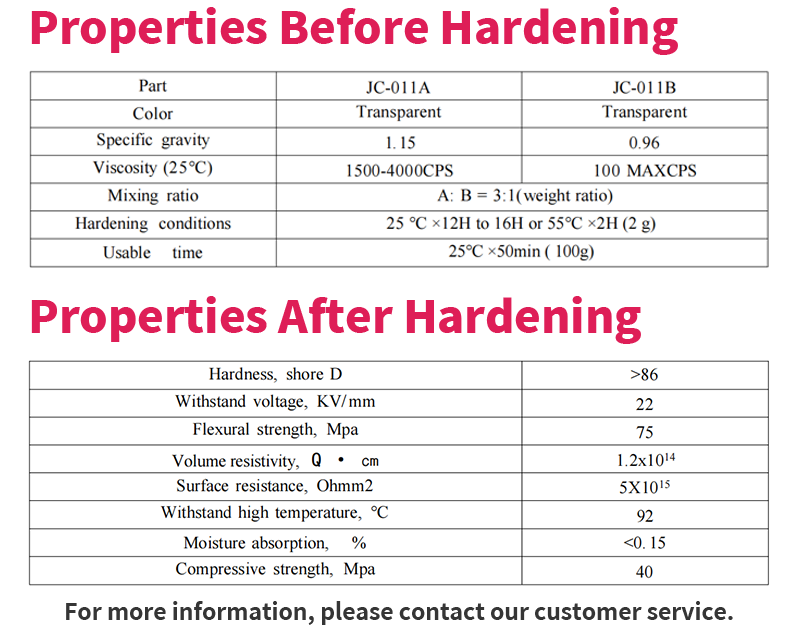
Apply over a properly prepared substrate and a compatible primer. Mix the two components thoroughly at the specified ratio, scraping the sides and bottom of the container so no unmixed material remains. Spread the resin within its working time and hold the recommended thickness.
Respect the recoating window before the finishing coat goes on, and carry out any surface preparation the system requires. The topcoat should be chosen for the project’s exposure and performance demands.
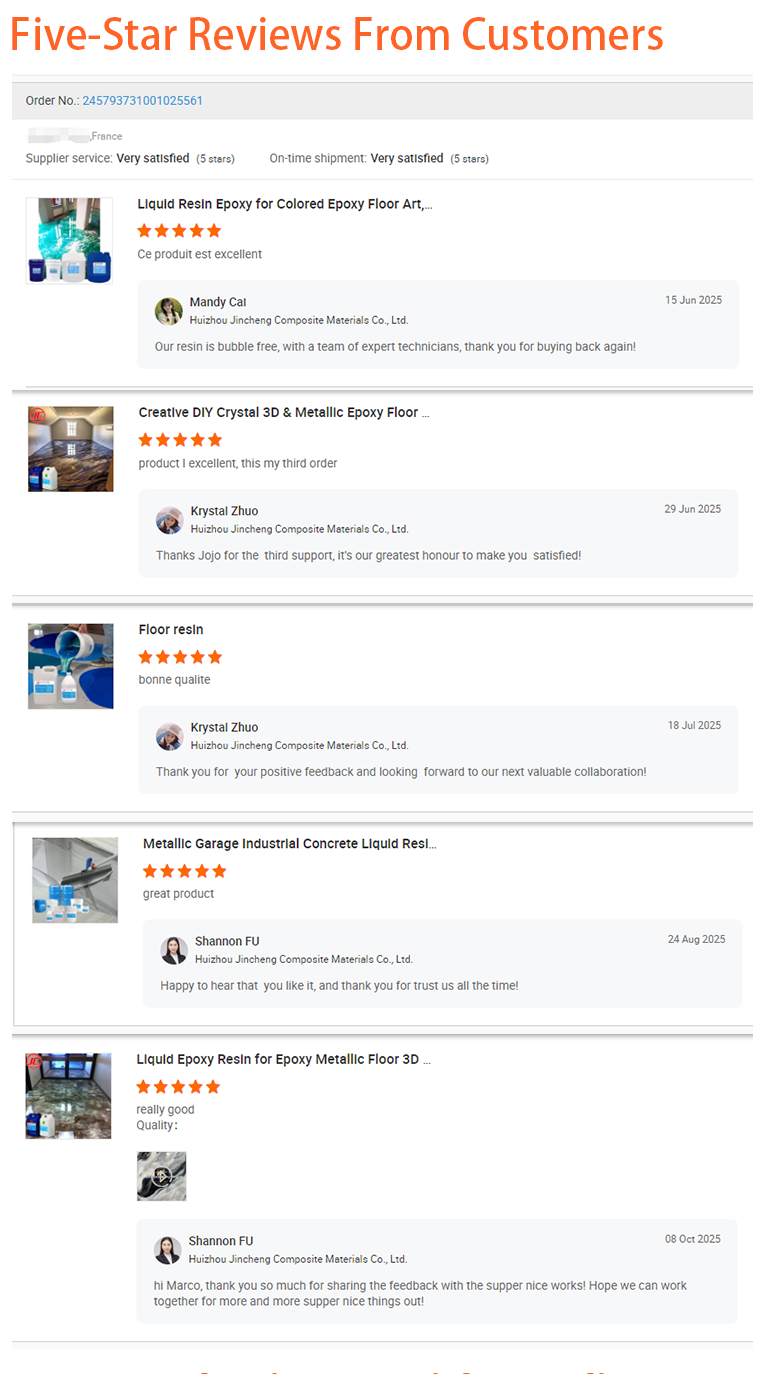
One-Stop Flooring Materials Supplier
High-transparent crystal epoxy resin R & D and production for 20 years.
Over 10 years experience for exporting.
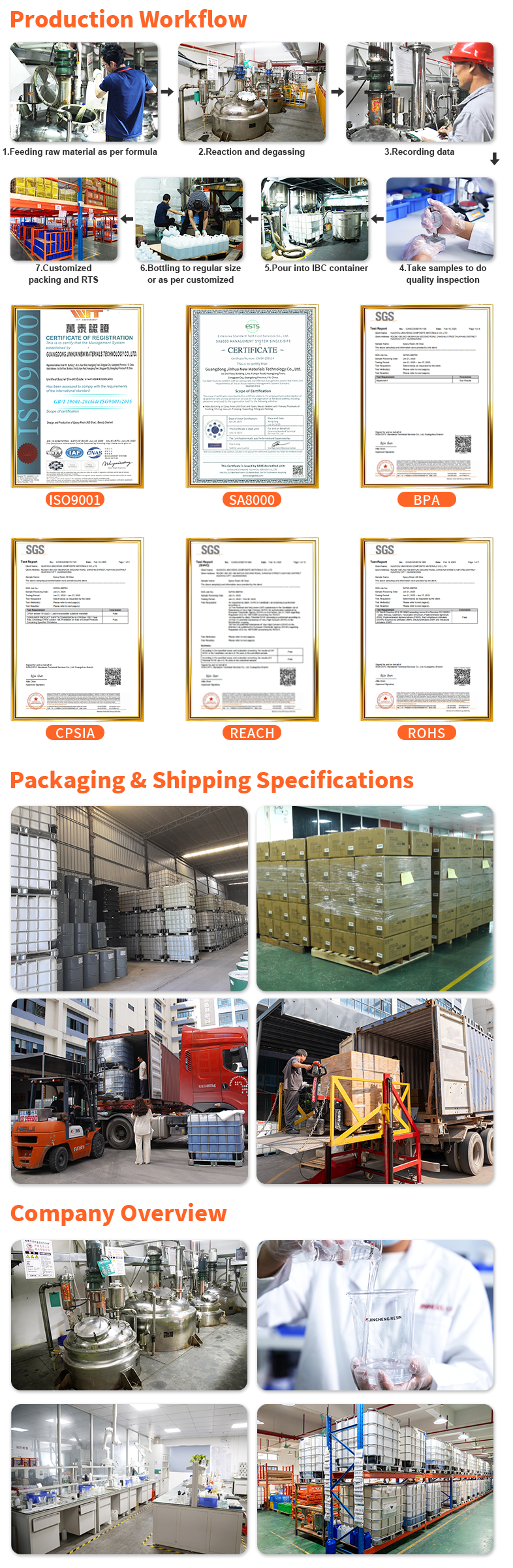
Quality Control : same workers for material feeding and same person to supervise and record data for every batch ; Taking sample to test and mark the details for batch.
ROHS,REACH,CPSIA,BPA,TRA, EN71 ,FDA etc. SA8000 social responsibility system, IS09001 quality system.
We are good at providing solution service for each industry product within 3 days.

Factory Profile
Fast delivery : Capacity production 1000 tons per month , 3~5 days delivery for batch order.
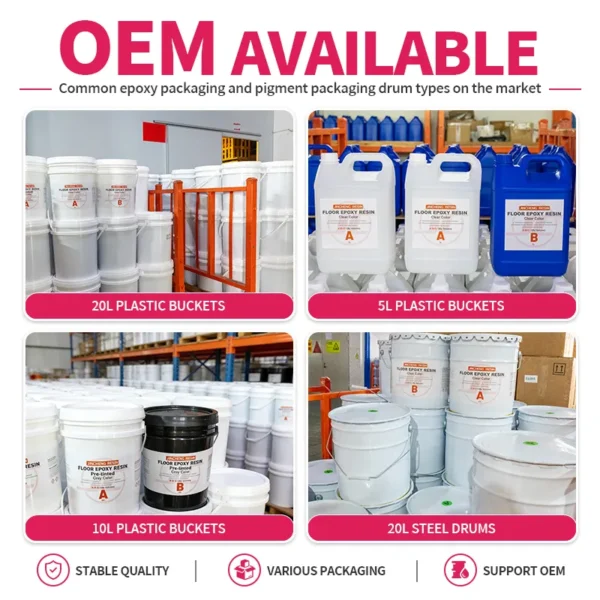
20 sets of automatic production equipment. 5 OEM production lines. Plant area 20000 square meters.

Huizhou Jincheng Composite Materials Co., Ltd. English Translation
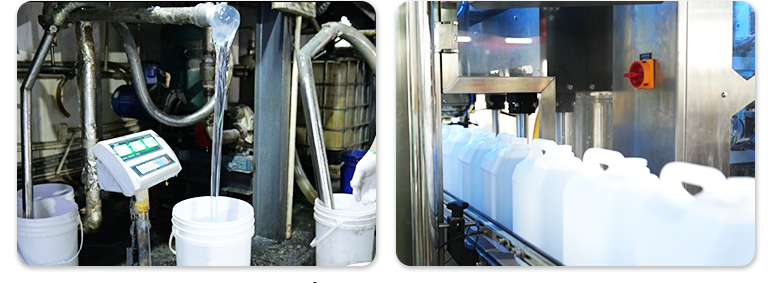
3 days delivery for R&D sample