

Some surfaces that are subjected to heavy footfall, chemical spills, exposure to water, and environmental changes need more than just painting as a protective measure. The use of a polyurethane protective coating helps enhance the durability and longevity of the surface through its special properties.
Unlike paints, which are used for the aesthetic value of the surface, polyurethane coating is produced in such a manner that it forms a protective coating on the surface. With their ability to resist wear and tear, flexibility, and resistance to the effects of weathering, these protective coatings can be used where there is a need for durable protection.
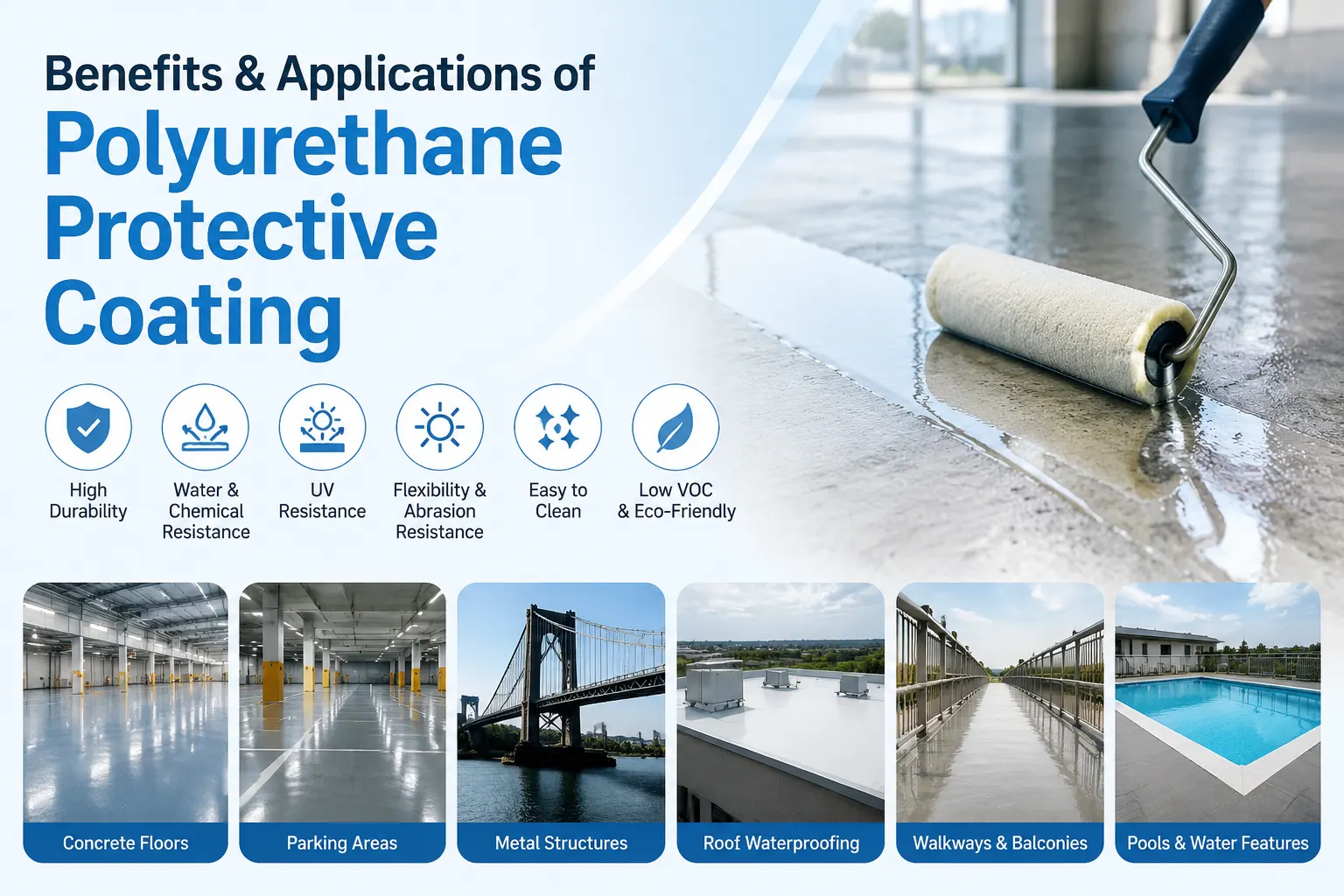
Importance of Polyurethane Protective Coating
A polyurethane protective coating is very important when it comes to protection from any kind of damage. There may be damage to the surface due to mechanical, chemical, temperature, and moisture effects. If no appropriate protection is applied, it can result in wear, cracking, fading, and decreased performance of surfaces.
The problem can be solved by using polyurethane coating, which provides a protective film on the surface. It gives additional resistance to the negative impact of various elements and, at the same time, makes the surface smooth and aesthetic. Polyurethane coating is a good choice for high-performance environments.
Common protection functions include:
- Resistance to abrasion caused by frequent use
- Protection against moisture penetration
- Improved chemical resistance
- Better surface durability
- Enhanced appearance retention
What Is Unique About Polyurethane Protective Layer?
Every type of coating has unique properties. The distinct feature of polyurethane protective coating is that it combines hardiness with flexibility.
While some hard coatings are known for providing a hard surface but become susceptible when there are variations in the substrate. Polyurethane gives better flexibility, making it suitable to adapt to any movement.
Key characteristics include:
1. High Wear Resistance
For high-traffic substrates, it is necessary to use coatings that can endure friction. Polyurethane is a wear-resistant coating and can be used on the floor where there is traffic of vehicles, equipment, and people.
2. High Weather Resistance
Outdoor coatings have to endure weather effects such as rain, sun, and temperature changes. Polyurethane coating provides good resistance to environmental exposure.
3. Good Chemical Resistance
Industrial surfaces have contact with oil, cleaning agents, and other chemicals. The right polyurethane protective coating protects the surface against chemical degradation.
Where Are Polyurethane Protective Coatings Used?
The flexibility of polyurethane allows for its use in numerous industries and applications.
1. Industrial Floor Protection
Industries need floor protection from rough operation. The frequent moving of equipment, transportation of materials, and pedestrian traffic will easily wear down an unprotected floor. In the case of industrial flooring, polyurethane serves as a coating finish along with other coatings.
A polyurethane coating system can improve:
- Floor durability
- Resistance to mechanical wear
- Surface cleanliness
- Maintenance efficiency
2. Commercial and Public Areas
Commercial surfaces should be practical as well as aesthetically pleasing. Office buildings, shopping centers, and service areas may require surfaces that can be easily maintained. Hence, these surfaces will serve as good choices for places where both performance and aesthetics have to be considered.
Polyurethane surfaces have:
- Smooth surface appearance
- Better stain resistance
- Long-lasting protection
3. Outdoor Applications
In addition to this, outdoor surfaces pose other problems such as UV rays, moisture, and temperature changes. In such a case, an appropriate polyurethane protective coating will assist in improving resistance to such environmental factors.
Applications may include:
- Outdoor walkways
- Parking areas
- Exposed concrete surfaces
How Does Polyurethane Compare With Other Floor Coatings?
Choosing the right coating requires understanding how different materials perform in different conditions.
Polyurethane vs Epoxy Coating
Epoxy is widely used because of its excellent adhesion and chemical resistance. It can be applied as a primer, intermediate layer, or finishing coating.
Polyurethane, however, is often selected when additional flexibility, wear resistance, and weather protection are needed.
| Feature | Epoxy | Polyurethane |
| Adhesion | Excellent | Good |
| Flexibility | Moderate | Higher |
| Chemical Resistance | Strong | Strong |
| UV Resistance | Limited | Better |
| Common Use | Base and coating layers | Protective finishing layer |
Polyurethane vs Polyaspartic Coating
Polyaspartic coatings are known for fast curing speed, UV resistance, and high durability. They are often selected for premium protection requirements. Polyurethane remains a popular choice because it provides reliable performance with good flexibility and surface protection.
The selection depends on:
- Application environment
- Expected service conditions
- Performance requirements
- Project requirements
How to Choose the Right Polyurethane Protective Layer?
Selecting a suitable polyurethane protective coating requires evaluating several factors before application.
Surface Conditions Should Be Considered
For different types of surfaces, different preparation techniques are required for applying the coating. Different surfaces, such as concrete and metals, have unique requirements before the application of the coating.
Environmental Exposure
The environmental exposure of the surface should be considered. Such exposure includes traffic, chemicals, weather conditions, and moisture levels.
Match Performance Requirements
For coatings used in warehouses, wear resistance is key; however, for outdoor projects, superior protection against environmental erosion is required. The selection of a proper coating in relation to existing conditions improves durability and cuts down on maintenance.
How Does Polyurethane Function in Contemporary Floor Coating Systems?
Contemporary flooring systems often involve the use of more than one type of material for better functionality. Epoxy will be able to create stronger bonding with great mechanical properties, but the protective layer can be applied using polyurethane to make the best of each material.
A normal system consists of:
- Epoxy primer for adhesion
- Intermediate coating for thickness and strength
- Polyurethane protective coating for surface protection
Conclusion
The good protection that is provided by polyurethane coating goes beyond just aesthetic value. Wear resistance, flexibility, chemical resistance, and weathering capability are some of its qualities that make it ideal for use in harsh conditions. The difference between polyurethane coatings and other types, such as epoxy, makes it easier to choose the best coating material depending on environmental conditions. Selection of appropriate coating materials leads to proper protection of surfaces.
For projects requiring advanced surface protection, exploring professional polyurethane protective coating options and selecting materials according to actual application needs can help create more reliable and durable coating systems.